

June Drop on Peach Trees and Proper Thinning of Fruit
Gardening Question:
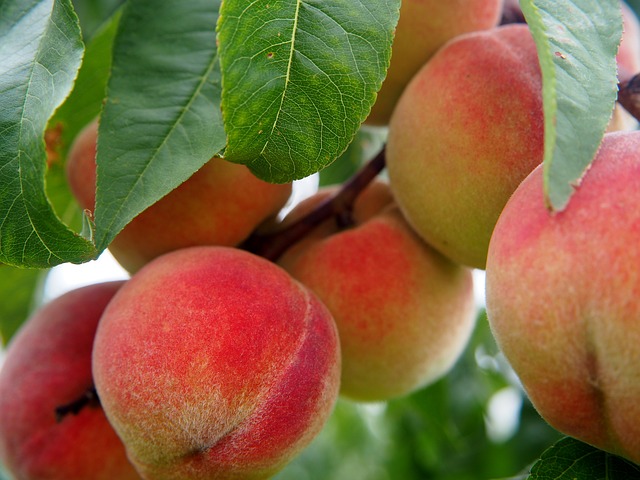
I have a peach tree in Irvine. The tree is a couple years old, last year giving a nice yield of delicious peaches. This year, the tree had lots of blooms that appeared to be turning to peaches. Recently I’ve noticed several of these little peaches are falling off the tree. What problem could that indicate?

Photo by jengod
Answer from Pat:
Peach trees and some other deciduous fruit trees tend to set many more buds and begin growing as much as twice the amount of fruit that the tree can support. As a result, the tree will always drop some of the fruit. This event happens every year and is called “June Drop”. (See page 243 of my new organic gardening book for a full discussion.) June Drop may occur any time between early May and the end of June, but usually occurs in Southern California in the first week of June. Trees may drop fruit several times as a result of weather fluctuations and other factors, but this is a perfectly natural and necessary occurrence. Additionally some flowers may have been inadequately pollinated due to rain or other reasons and the resulting fruit from these blossoms will have brown centers and an inability to grow to maturity. The tree will drop these fruits which will never mature. Some tree owners who have never heard of June Drop panic when they see large numbers of fruit falling from the trees thinking they have done something wrong. Most likely it is just the natural need of the tree to drop a lot of fruit. Simply rake up the fruit every time it falls and add it to the compost pile.
Another fact fruit tree owners need to learn is that despite June drop, the tree will never drop as much fruit as it needs to drop for its own good. Thus the gardener must remove additional fruit. When the fruits are the size of a hen’s egg, this is the time to begin thinning the fruit out by hand. The system is to pick or twist off the smaller fruits and leave the largest ones in place with just one or two fruits at each twig or joint. Gardeners may need to do this job more than once. After thinning, the fruits should be evenly spaced down the branches with adequate room for them to grow to proper size. Neglecting the chore of thinning out fruit can weaken the tree and effect future harvests. If fruit is not thinned out this year the tree won’t bear as many flowers and fruits the following year. If thinning is neglected for many years, the result will be ever-smaller harvests.
I have done some research but I’m having a hard time finding specific information on how to treat, and most especially what to feed a peach tree when I live in southern California and I also am near the beach. I was wondering if you might have some advice.
Thank You for your time and attention. 🙂
When growing deciduous fruit trees in mild climates such as we enjoy in southern California, do not follow the advice given in books written for gardeners in cold-winter climates such as England or the Midwest or eastern regions of the United States. Gardeners in the east and middle west often fertilize their deciduous fruit trees in fall. That is an extremely unwise procedure in mild coastal zones of California since it can prevent the trees from entering dormancy. In fact we should not fertilize our deciduous fruit trees much at all, especially we should not give them a lot of nitrogen since this can make too many leaves.
Here are my recommendations for growing peach trees in Southern California. First choose a good, low-chill variety appropriate for your climate zone. Secondly, plant it in native soil of your garden, but first making sure that drainage is good according to the instructions in the box on page 40 of my book. If planting in clay soil work a half coffee can of gypsum into the soil in the bottom of the hole prior to planting. Once you have planted your peach tree, add mulch on top of the ground and keep the ground moist but not soggy with regular irrigation.
Prune the tree at planting time so it is 2 feet above the ground for dwarf trees and bare-root trees that are little more than a whip. If you are planting a sturdy little tree with a good trunk, however, cut it to 3 1/2 foot in height. After the first year of growth follow the instructions in a good pruning manual for choosing a good arrangement of three or four good low scaffold branches and a proper shape to the tree. Peaches grow fast and are vigorous. They require more pruning than other deciduous fruit trees. Once a tree is three to four years old you will need to prune off as much as one third of the growth of every branch every dormant season. Peaches bloom on new wood so you must cut off the old to make the tree put out new growth. Otherwise it will get bigger and bigger with all the fruit on the ends of the branches. Follow the instructions in a good pruning manual and prune in winter during dormancy. Don’t let it get too tall and always take off the water sprouts in August. (My book will remind you to do all such things if you just read it and follow it month by month.)
About one month to six weeks after planting, after leaves have fully unfurled you can then fertilize the tree very lightly with two or three cups of aged chicken manure. Sprinkle this on top of the ground over the roots and water it in. Water your tree regularly and deeply but not excessively, and fertilize them very lightly in spring just as the flowers begin to open. Deciduous fruit trees don’t need much fertilizer and don’t do well on synthetic fertilizers. Aged chicken manure or guano makes a good complete fertilizer. If your soil is sandy also feed with bone meal for phosphorus and Sol-Po-Mag for potassium annually. (Phosphorus and potassium can be added in fall or winter—January, for example, since time is necessary for them to take effect.) Once again, do not over-fertilize with nitrogen because this can cause too much foliage at the expense of flowers and fruit.
Once a peach tree reaches two or three years of age and begins to bear fruit, you will need to thin the fruit out every spring as it forms so that the fruit is evenly dispersed down the branches and not crowded. If there are no bees in spring when the blossoms are on the tree, some fruit may not get pollenated. So make sure there are bees or hand pollenate with a paint brush.
Deciduous fruit trees are subject to peach leaf curl, so it would be wise also to apply dormant spray in winter. Serenade is an organic spray that can combats some diseases also, so if you see signs of disease when it’s past time for dormant spray, try Serenade. Follow the directions in the chapters for November, December, and January for dormant spray, and for pruning and care of deciduous fruit trees. Note also: some organic gardeners don’t use dormant spray because they find gardening organically seems to kill most insects and diseases, but if peaches are involved I wouldn’t be too sure. Peach leaf curl is pretty pervasive and dormant spray is covered in detail in my book. Encourage beneficial insects by growing a wide range of wild flowers, herbs and other plants that have pollen for attracting beneficials. Green manures also make a great soil amendment for deciduous fruit trees including peaches. For example, you could plant the ground under and around your deciduous fruit trees in fall with scarlet clover and in spring simply cut it down as mulch or turn in under the top layer of loose soil.
I have an apple tree – about 10 years old. It has been producing a large crop of apples every year. This year, after the apples were about dine size, the tips of many branches died, along with the immature apples. i sprayed with oil spray while the tree was dormant. did I do something wrong?
Dear Judy:
Without seeing your tree I cannot say for sure what is wrong with it, but unfortunately it sounds as if your tree has fire blight (Arminia amylovora). Fireblight is a bacterial disease that affects all members of the apple family, including apples, crabapples, pears, quinces, hawthorne, pyracantha, and roses. Birds and insects are the main carriers of this disease as they fly from a diseased tree during the bloom season and deposit fireblight bacteria on the blossoms and new shoots of healthy trees. Warm spring temperatures combined with high moisture, such as we have had this year in Southern California, can then increase growth of the disease. Usually only one or two branches are infected, but in the case of your tree it sounds as if the tip growth has caught the disease throughout the tree. Once a branch or twig has become infected it spreads down the branch. Leaves go brown, fruit shrivels, and wood blackens just as if the tree had been scorched by fire.
To treat this disease, cut out all infected growth as soon as possible, making the cuts into the clean, healthy wood eight-inches to one-foot beyond the diseased portion. Whenever possible, cut the infected part off at a joint so that it won’t stimulate more growth. When making the cuts begin with clean, disease free tools. Dip them into isopropyl alcohol before you start pruning and then dip them again after each cut so you don’t continually re-infect the tree. Bag all the diseased wood and send it to the dump. Don’t cut off more than you need to since heavy pruning will create a flush of new growth and that may stimulate more fireblight to hit the new growth.
There is a highly-effective protective spray against fireblight you might consider using next year at bloom time. The spray is the antibiotic streptomycin (AGRI-MYCIN) mixed with water. Mix 1 teaspoon of antibiotic spray solution to one gallon of water and spray all over the tree when about 20 percent of the blossoms have begun to open up their petals. (Follow all package directions.) Continue spraying once every five days during bloom and always re-spray after rain.
Spraying deciduous fruit trees, including apple trees, with oil spray in winter is not the wrong thing to do, though it won’t control fireblight. Dormant spray protects trees from overwintering insect damage and from fungus diseases, but fireblight is unaffected by it since fireblight is caused by a bacteria. But regarding dormant spray, it is a wise course of action even for organic gardeners, though some organic gardeners now eschew dormant spray, saying that their trees no longer need this treatment because of the build-up of natural disease controls in the soil. Nonetheless, as a general rules apple trees should be pruned in autumn, after leaves fall, and then dormant sprayed at least twice with a lime-sulfur spray mixed with horticultural oil, such as Bonide Organic Lime-Sulfuir Spray, or fixed copper spray. (On apricot trees, fixed copper or Bordeaux should always be used instead of lime sulfur, since lime sulfur sprays burn their buds.) See the index of my book for several discussions of dormant spray beginning on page 57.
Hi Pat, I had just picked up a dwarf peach treefrom homedepot about 1.5 – 2 foot tall at $11 on sale price. I am not sure what variety and how old, perhaps less than a year old. My plan is to put it in a 1/2 wine barrel container due to my small backyard. I also saw a taller super dwarf tree at Lowes about 5-6 foot tall at about $30. Should I get a bigger one for sooner harvest and pay more or it won’t make too much difference ? I am in Chino Hills which is San Bernardino border line with LA. What dwarf variety would you recommend and where to get them? Thanks-James
In general I don’t advocate purchasing deciduous fruit trees in cans. I think it is far better to purchase deciduous fruit trees bare root in January and plant them in January, and that this results in a better start with fewer diseases, such as peach leaf curl or pest problems or root problems, such as roots going around and around in the cans. Additionally, I do not advise gardeners to purchase fruit trees from discount houses such as Home Depot or Lowes, since they purchase in big lots and distribute them to all stores without regard to proper climate zones or the best varieties for flavor and fruit quality. For example, ‘Bonanza’, a well-known dwarf peach tree, is not particularly good tasting. ‘Honey Bee’ or ‘Pix Zee’ are much better genetic dwarfs. No pollination needed and a half barrel is fine, but unfortunatley you purchased a dwarf tree without the variety written on the label so you don’t know what you got. That is not an appropriate way to sell trees. Many peach trees are adapted to your climate but you might have a mediocre variety instead of a good one. That said, unless you plan on returning the tree you purchased, I would go ahead and plant the one you bought on sale and definitely would not purchase a larger one which is too big to grow in a half-wine barrel. To answer the rest of the question, next time if I were you I would purchase deciduous fruit trees bare root in late winter from a conventional nursery with a good reputation, such as Louie’s Nursery in Riverside. If you want to learn more about peach trees and varieties, consult pages 479 to 482 of “The New Sunset Western Garden Book”, which is the latest edition and includes a list of the newest peach and nectarine varieties as well as the old standby’s and all their individual characteristics.
just found your website as I was searching for “june drop” in my case the lack of it, lots of rain here in Minn., so I don’t think it will be happening, but will “cull” as you instructed-GOOD STUFF PAT! THKS AND GOOD SITE YOU HAVE!
Thank you for your kind comment. I’m glad my answers to gardeners’ questions are helpful to you and many other people.
Planted a Belle of Georgia peach tree this early spring (early march in Tennessee). It was doing great, bloomed and leaves, now its mid May……fruit fell off and now leaves are rapidly falling..! We did have some cold while blooming but they were covered. My other peach tree also lost its fruit after getting about the size of a big grape…. They get plenty of sun and water….HELP..!
Peach trees are dropping fruit and leaves nationwide due to erratic temperatures as a result of climate change. I have answered questions from many other readers on this subject. Unfortunately there is no solution except getting on the bandwagon to force governments worldwide to stop pumping carbon dioxide into the atmosphere.
Human beings have been asleep at the switch and have not shown signs of reform, which should have begun at least 50 years ago. Other deciduous fruit trees are also affected but peaches are suffering worse than other fruit trees. Terrible storms, floods, and rising oceans are even more threatening than fruit drop from peach trees.