

Never Add Clay to Sand or Sand to Clay
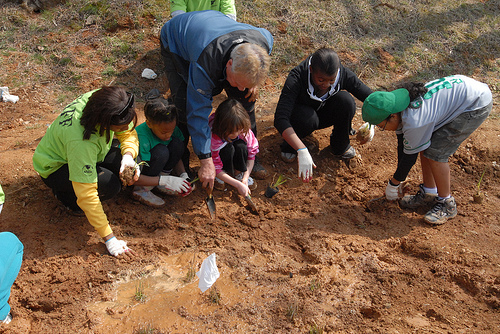
Adding sand to clay soil, in any amount, has been proven by the University of California Agricultural Extension and the U.S. Department of Agriculture to be about the worst thing anyone can do for their garden soil.
Adding organic soil amendment, such as horse manure, to name just one possible amendment, is a worthy suggestion, especially if the manure has been aged or composted for three months by layering it with rotted alfalfa hay.
However, if the manure is salty this can be a negative factor in clay soil since it’s difficult to wash out the salts. In general, the safest method for amending alkaline clay soil is to work in all the pre-nitrolized or fully composted organic amendments one can get one’s hands on or, when impossible to dig them in, then use them as mulch on top of the ground. Plant roots will also eventually help break up soils.
Adding organic soil amendment, such as horse manure, to name just one possible amendment, is a worthy suggestion, especially if the manure has been aged or composted for three months by layering it with rotted alfalfa hay. However, if the manure is salty this can be a negative factor in clay soil since it’s difficult to wash out the salts. In general, the safest method for amending alkaline clay soil is to work in all the pre-nitrolized or fully composted organic amendments one can get one’s hands on or, when impossible to dig them in, then use them as mulch on top of the ground. Plant roots will also eventually help break up soils.
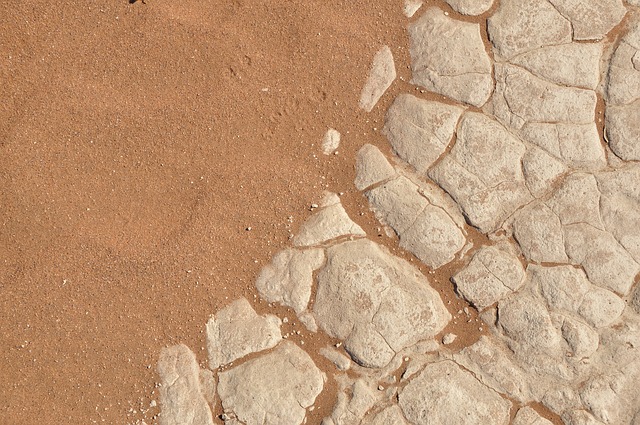
Southwest gardeners need to know that when poor drainage in clay soil is caused by alkalinity, one of the best things one can do is to apply soluble gypsum according to package directions. Organic gardeners prefer using rock gypsum which has not been altered by chemical processing. However, the honest truth is the soluble type works best. Gypsum breaks up clay soils that are alkaline by releasing soluble calcium which replaces some of the sodium on the clay particles and thereby produces a more open soil structure. Work approximately half a coffee can full of gypsum into the earth on the bottom of each planting hole and also broadcast gypsum on the ground surrounding plants in the established landscape so it looks as if a light snow had fallen. Do this at least once every three years and water it into the ground. The action of gypsum does not last forever, so repeated applications are necessary. Gypsum is a relatively inexpensive amendment. It will not hurt your garden soil and may help a great deal.
All soil experts will tell you one of the first rules of amending soil is “never tamper with the structure of your soil.” A soil’s “structure” means the arrangement of the sizes of particles in it and their relationship to one another. All soils are categorized according to their texture and the 4 basic soil types are clay, sand, silt, and loam. Clay is a firm, fine-grained earth containing a large amount of tiny mineral particles less than 0.002 millimeters in size that have negatively charged surfaces. Clay feels slippery and sticky when wet. Sand is a loose earth mainly composed of tiny particles of rock between 0.05 and 2 millimeters in size. It feels scratchy or gritty to the touch. Silt is a fine-grained earth made up of rounded, weathered particles. Loam is a combination of the other three (clay, sand, and silt) in varying ratios, the optimum being equal quantities.
Since loam is a naturally occurring mixture of clay, silt, and sand and is widely considered the best garden or agricultural soil, many people, sadly including some misinformed garden writers, have erroneously supposed that all you need to do to get loam is to mix the other three together, or perhaps only clay and sand, and that—Voila!— you will end up with loam. Unfortunately, this doesn’t work. The fact is that adding sand to clay soil in any amount is an extremely dangerous thing to do. You end up with something akin to concrete. The same is true of adding clay to sand. In either case, the fine clay particles will fill in the larger spaces between the sand particles, thus permanently destroying drainage. In a garden of clay soil, it would be impossible to add sand in sufficient quantities to approximate a natural soil made up of a mixture with a ratio that is more sand than clay.
Gardeners often confuse lack of drainage due to clay soil with the word hardpan, but actually these are different condition. Clay is a type of soil, but hardpan is a condition in which a layer of soil that does not drain lies on top of the soil or is buried under topsoil that drains. Hardpan is a layer of hard, compacted soil of any type cemented together by minerals and almost impenetrable to roots or water. Hardpan is often made of clay but it is not the same as clay soil.
Caliche is yet another type of soil sometimes referred to as hardpan by gardeners. Caliche is a crust of calcium carbonate, usually white or gray in color that forms on the stony soils of arid regions such as found in the Southwest. Hardpan and caliche may be buried under the ground, as in housing developments where it is sometimes covered with a layer of topsoil, or it may lie on top of the ground. In some cases the hardpan may be only be a foot thick in which case one can use a crow bar to break through it to a lower layer that drains, thus creating drainage in the bottom of planting holes. In other cases hardpan may be many feet thick. The best way to combat a clay-based hardpan is to plant in raised beds and terraces filled with amended topsoil, or to make frequent additions of soluble gypsum and a variety of organic soil amendments as explained above.
Photo by USAG-Humphreys 
Hello
I read your article after a number of others that reccommend mixing in sand to clay soil to achieve better quality.
You specifically warn against that. Does that apply to the Northeast as well?
I was about to buy additives . . .
Thank you.
Karen in Montpelier VT
Dear Karen:
It is unfortunate that some websites, books, and TV shows give the wrong advice about adding sand to clay soil in a futile attempt to lighten it up and make it drain. Adding sand to clay soil is one of the most dangerous practices imaginable since you will end up with something akin to cement. This advice applies nationwide.
The natural arrangement of particles in soil is called “soil structure.” Never monkey with the natural structure of your soil. (See pages 21 of my organic book for a full explanation.) The only safe way to make clay soil drain better is to increase its humus content by adding organic materials, such as well-rotted bagged, trucked, or homemade compost or aged manure. In the west we also add soluble gypsum to our clay soils to make them drain better, but this technique only works when the cause of bad drainage in clay soil is it’s alkalinity and this is unlikely to be the case in your east coast garden. See page 20 for full explanation of pH.)
In the days of my youth I lived on a Bucks County Pennsylvania organic farm. We had hard red clay soil, but clay soil is nutritious and full of minerals. We amended our garden and agricultural soils with chicken, cow, and sheep manure from our own animals, and our red clay soil became amazingly productive. In our pastures the soil became black with organic matter.
If you were to add sand to clay or clay to sandy soil the process is similar to filling a room with basket balls. Then you add tennis balls and shake it down. This fills all the space between the basket balls, then you add ping-pong balls, and shake it down again and this fills up all the spaces between the tennis balls. Finally you add marbles and once again shake. By then all the spaces between the original balls are filled up and you have less drainage than before.
Experiments done by Agricultural Scientists at the University of California many years ago demonstrated conclusively that adding sand to native clay soil in the attempt to make it drain or adding clay to sand with the hope of making it more water-retentive does not work and harms soils in a devastating way. It is a drastic mistake because it is irreversible, and this is true nationwide. It is impossible to add enough sand to clay to create a natural soil that drains well, as occurs in nature. (The textures of soils and types of soils are discussed in detail on pages 21 and 22 of my book.) The only safe substances to add to clay soil are organics. Adding organic matter to soil is your path to a highly productive garden. I can promise you it works.
Hi, Thanks very much for this information. A local man here in montpelier vermont named Ray Hickory stated that I needed to buy a truckload of sand to add to my yard’s soil because of the clay soil conditions, he told me. I didn’t go along with his trucking in sand because he was not willing to write up an estimate for a job here (a bulkhead) and also I wondered about the safety of importing sand — how does one know what’s in it, for example. But I did not know that the effect of adding sand to clay soil makes for diminished drainage (cement). I wonder who else this Hickory guy has given such poor “information” to. He’s been in bizniz around here for a long time, so I can’t help wondering if he doesn’t know better about trucking in sand.
Good points all around. Truly aprpaecited.
Hello,
I have been searching for a solution to gardening in clay soil since last year when I moved to Arlington, Texas. Almost everything says to add sand to amend the clay. I am wanting to plant a couple of fruit trees and had I not found your article I would have used sand (in fact I was already figuring out how many bags I needed). I am planning on putting my trees(miniature peach and apple grafted onto M-111)in a raised bed. Do you have any recommendations?
Thank God you did not add sand to your clay soil! I am certainly glad you looked at my blog first. Adding sand to clay soil or clay to sand results in something akin to concrete, stopping drainage completely and the problem can never be fixed. I once knew someone who did this to his perennial flower beds and drainage became ever worse as he added more sand annually. Eventually the guy, an avid gardener, died so I never heard what happened to that garden later. The opening chapter in my current organic book, and also the (conventional gardening) edition published in year 2000 and now out of print and out of date also, but still obtainable on the Internet, explain soil problems and solutions more fully. These books go into soil problems and drainage problems in detail. But it’s best now to be an organic gardener, so if you spring for one of these books, buy the current organic one.
Clay soil is nutritious. Plants will grow in it, but you are right a raised bed can be a great help when first planting. Luckily it does not need to be very high. For a deciduous fruit tree you could build a raised bed that measures 5×5 and is at least 4 inches high and fill it with a good grade of top soil.
What is important here however is that you must dig up the clay beneath the raised bed to about a foot deep and mix gypsum into that and also mix some of your top soil into the top layer of the native soil below the raised bed. This is so you do not create a hard horizon between two soils which will stop roots from penetrating.
If you create a hard horizon between friable soil above and hard clay below you are making hardpan, which happens when builders in housing schemes throw a layer of top soil on top of bulldozed ground. Plant roots tend to stay up in the top layer and never penetrate the lower layer, and then the hard lower layer stops drainage. This is a genuine problem for many gardeners in new homes.
Despite having explained the system above which will help prevent rotting roots in clay soil by use of a raised bed, my belief is that you can garden in clay soil and plant straight into it, just as it is since I have seen it done many times. The surprising thing is once you begin digging into clay soil and mulching the top of it, eventually the very act of gardening in it and the roots getting into it will help break it up and plants will grow. Clay is minerally rich and plants will often thrive in it better than poor sandy soils that drain well but do not retain nutrients.
The wrong thing to do is to dig planting holes and fill them with organic soil amendment since that creates pockets of soggy ground that fill up with water and rot roots. Also roots will think they are in a container and go around and around inside the amended plant hole and never get out into the surrounding soil.
Many scientific experiments have been done to show that the best way to deal with clay soil is to plant directly into the native soil, though plant a little high, and then continually mulch the top of it. The roots of plants have to get out there eventually so the sooner the better. Rough up the sides of planting holes, instead of making a smooth hard edge. Even clean unsalty horse manure can help break up clay when laid on top like mulch before the rains, but I strongly emphasize must not be salty. Manure brings earthworms and they also help break up the ground and make it drain. (When using horse manure, be sure your tetanus booster is up to date.)
One important factor is that if the clay is compacted due to alkalinity, adding gypsum can aid in breaking it up and making it drain, but you should add the gypsum every two years and a half-coffee can full of it dug into the bottom of every planting hole. Gypsum will not correct drainage problems caused by compaction from walking on the ground or heavy equipment but it will greatly help soil to drain when the compaction is caused by alkalinity.
I have known a few gardeners who have hauled away truckloads of pure sandy or clay soil in gardens built on sand or clay and replaced with top soil but this is not necessary and is very expensive. (Again, one must be sure not to create a hardpan layer beneath the top soil. More details on all this are in my book.)
I was so pleased to find your blog. I am researching for a science activity with 3-6th graders, and this is exactly the information I was looking for. We will actually be doing exactly what you advise NOT to do, but the purpose is to show why taking our clay soil in Texas and mixing in sand would actually be detrimental to the soil.
However, I would like to give them something to think about as positive alternatives for soil enrichment that can be done in their yards. Many of us have yards that are likely placed over thick, compacted layers of clay. (I can tell by the runoff when the sprinklers run in our neighborhood.) How do we add organics to the yard without tearing up the grass that is there?
Thank you for your question and for the work you are doing with kids. I think it’s a great idea to replicate experiments that were done years ago by the UC Extension and Department of Agriculture in California. These experiments could be done in 1-gallon nursery cans, I would think, though the University of California might have used larger containers. I am not sure. Presumably one could mix various measured percentages of sand with clay and then fill the nursery cans to about 2 inches from the top with the mixtures and subsequently apply measured amounts of water to the soil in the cans and then measure how much comes out the bottom of the cans and at what rate.
The important thing to impress on the kids is that in a garden it would be impossible to add an equal amount of sand to clay. In a practical example, years ago I knew of a garden in Fallbrook California where the soil was heavy clay. Instead of adding organics to improve his soil, the gardener added wheelbarrows full of sand to the clay because an English garden book gave that advice. He kept adding more sand every year to a long flower bed filled with perennials. Eventually the soil was so ruined that drainage was nil and many plants died from root rot.
To answer your question: There are a couple of ways that organic materials can be added to existing lawns. One way is to rent an aereating machine that goes all over the lawn and makes round holes in it. The next step is to rake up and throw away or compost the plugs that the machine pulls out of the lawn. After that spread ground bark onto the lawn and rake it into the holes. Follow up by fertilizing and watering the lawn. The best time to do this job is fall. September or October would be ideal. This will help increase drainage.
Please note that while answering the first gardener who wrote to me on this subject I recommended adding soluble gypsum to help break up clay soil. When clay soil fails to drain due to its alkalinity, applying gypsum according to package directions can aid drainage. One can mix it with the ground bark recommended above and rake it into the holes along with the bark or apply it separately once or twice a year on top of the ground and water it in.
Another idea for adding organics to lawns is to top the lawn with dry cow manure in fall or early spring. Back in the years when I had a lawn I did this job every fall but my lawn was growing on sandy soil, so it was okay. First I would cut the lawn short, then top with manure and follow up with water and the grass soon bounced back greener than before. The problem with using this technique on clay soil is that bagged cow manure is often salty and clay soil can retain salts. A better way is to use any fine-textured mulch recommended for topping lawns. By topping the lawn annually or bi-annually in spring and fall you can gradually add to the organic structure of the soil under a lawn, but not as much as if you aereated first and then raked the organics into the holes.
This is Ben Cole,I want to order some CLAY SAND,that you have in your shop.I want you to get back to me with the price including taxes and I want to know do you accept Credit cards as your payment.Hope to hear from you soon.
Hello Ben:
Once you select the product of interest you’ll see the prices. Shipping and taxes are then calculated based on the products you order and the ship to address.
Please contact us with any additional questions!
-Pat Welsh Gardening
This is funny since there is a book called ‘Build Your Own Earth Oven’ by Kiko Denzer that specifies mixing sand and clay or clay, sand and manure/sawdust, to make a clay oven for baking artisan breads, pizzas and other good things. The mixture of clay and sand – hard as ‘brick’ for an oven that lasts and holds together with a large baking area inside.
Thanks for your amusing comment. I just returned from a trip through New Mexico and Arizona where the walls and buttresses of churches that have stood for hundreds of years are built of clay, sand, and straw. In order to keep these sun-baked buildings standing to this very day, dedicated locals apply a layer of this muddy mix (sand, clay, and straw) to the exterior walls annually. While in Taos, New Mexico, I saw a video of Maria Martinez gathering clay and then mixing into it about 20% of volcanic-based sand before shaping it into pots and firing it in an outdoor open fire of dry cow pats to create her distinctive black Santa Clara pueblo pottery. I guess my heading should have been: “Be Sure to Mix Sand into Your Clay Soil if Your Aim is to Make Pottery or Adobe Bricks Instead of Growing Vegetables and Flowers.” Do you think that would finally teach people?
Hello Pat!
Wonderful Blog. Thank You.
I have a question.
I usually use mulch to keep weeds from coming up in the paths between my garden beds. This year I was going to use sand; until I found your website! The reason I wanted to use sand was twofold 1) to lighten the heavy clay soil (which I now know is not correct) and 2) to keep weeds down in the paths between my garden beds.
I don’t want to use mulch any longer because it is expensive and in 6 months has turned into dirt which the weeds love.
The benefit of the mulch as a weed detterent is short lived but then again each season I use the soil that formed from the mulch in the paths and add it (as organic matter) to the beds.
This is working but it is a lot of work.
I am looking for something perhaps more permanent to keep weeds down in the paths. The beds are NOT raised so adding gravel to the paths would eventully get into the beds as I tilled and worked the soil. Any reccomendations for something to keep weeds down that isn’t mulch, sand, or gravel?
The beds are NOT raised so adding gravel to the paths would eventully get into the beds as I tilled and worked the soil.
Amelia,
Try using wood chips. They do breakdown like mulch, but at a lot slower pace than simple mulch. You can usually get them from tree companies for free. However, you will probably get more than you need, so buddy up with a bunch of neighbors. A four to six inch depth should keep down the weeds. You will need to refresh every four to six years.
Woody
Thank you for your comment.
Good info thanks.
So here we are in southern Vermont about to start putting some beds into sandy fill. We don’t really know how deep it is, it could be 5 to 10ft deep. We are currently planning to dig a foot down into the stuff and then mix what we dug with compost and some peat and vermiculite. We will use this to create beds that extend below the surface one foot and above a foot for a 24inch deep bed.
One of our biggest questions is should we be putting something at the bottom of the bed to slow the drainage of nutrients through the sandy fill at the bottom?
Any advice would be greatly appreciated
I know what you are up against since I garden in sandy soil and have done so for many years. Some of the soil in my garden was almost akin to beach sand when I began gardening here. Roughly a million years ago that is probably exactly what it was. Sandy soil such as I have in my garden has some huge benefits and a few detriments. Chief among the benefits of sandy soil is the good drainage plants enjoy. Most wildflowers and many drought-resistant plants revel in good drainage, but chief among the detriments is the fact that sandy soil is “hungry soil”. It retains no nutrients and rapidly eats up any composted soil amendments with which you try to build it up. Additionally and quite the contrary of what most people would suppose, in dry weather it is often difficult to get sandy soil wet. This is due to the fact that sand crystals have flat sides and square corners and tend to line up together like soldiers’ shields in a Roman phalanx, thus stopping water from penetrating. When this happens water simply rolls off dry sand especially when it is on a slope. The best way to improve the fertility and water retention of sandy soil is to add manure to the soil every year. (In dry climates such as where I live this activity needs to be combined with regular irrigation or heavy winter rains or one’s garden soil might become salty. In Vermont, however, rainfall should be adequate to leach the salts out of the manure.) Get a truck load or two of aged horse, cow, or sheep manure and spread it on top of the soil to the depth of about 4 inches.Then dig it into the ground to the depth of about one foot. From then on continue to add aged manure on top of the ground annually. If you add it in fall you can safely use fresh manure and let it age on top of the ground and then leave it there as mulch or you can safely dig it into the ground prior to planting in spring. Following this method, you will eventually enjoy great garden soil that is black and sweet smelling and in which you will be able to grow anything. I do not recommend mounding up the soil as you apparently plan to do since mounded soil dries out too quickly. Additionally, do not try to install any kind of barrier under the top soil you will produce. Your desire should be for any salts coming from the manure or fertilizers to be freely leached away into the ground by rain and irrigation. Stopping this from happening would be detrimental to your plants. Unfortunately, there will already exist somewhat of a barrier as I have explained above. Until you have begun improving your soil by manuring it annually and kept this up for several years the dry soil down deeper will form a phalanx to some extent and prevent water from pouring down into the ground as freely as it should. But as you faithfully continue your program of regularly amending your garden with manure, your problems with dry soil will eventually vanish. The manure will dramatically increase the humus-content of your soil so that in time it will become like a fertile sponge holding just the right amount of water and nutrients to give the roots of your plants the perfect growing conditions that you desire and they require for healthy plant growth.
I have a sandy loam (old river bank; which hasn’t flooded for 40 years since locks were build) but it dries out too quick. I want to remove 15″ from 1 bed, and lay a 2″ layer of river silt in the bottom; then put the garden soil back, without mixing it. I like horse/cow manure, but I don’t want to have to compost the grass/weed seed from it, but that’s probably what I need to do, (and dream of having a rabbit manure connection). Thanks for you post, and shoot at my silt layer idea.
Add any amount of organics but do not layer or mix another kind of soil. This is asking for disaster.
I Rototill gardens in the spring,I’ve countered gardens that were so heavily compacted from clay that a root wouldn’t penetrate then anyway,anything a gardener can do to loosen the soil will help. personally I would tell them to have it removed, and put in some good dirt I never known any plant that liked a clay soil..
There are many gardeners who would agree with your view. On the other hand there are many on the other side of the fence who say along with Alan Chadwick, the great promoter of Bio-Intensive Gardening and Double-Digging, “There is no bad soil, only neglected soil.” Many plants thrive in clay soil and will do better in clay than sand, for example, since clay is chock full of nutrients and minerals and holds moisture, while sand has nothing in it and cannot hold moisture. I point to the orange groves of California many of which thrive on clay soil and to roses that cover themselves with glory when grown in amended clay and require far less water than when grown in sandy or silty soils. I grant you that amending clay with organic matter it is a back-breaking job. Double-digging works much better than rototilling and can be accomplished with machinery also. Plowing and disking works fine. I know since I lived on a farm when I was in my early teens. Our soil was red clay with rocks in it. We plowed our fields and disked in aged chicken, sheep and cow manures. Our results were phenomenal. Everything from vegetables and fruit trees to corn, wheat and alfalfa grew vigorously and produced abundant crops. Rototilling is perhaps not the best way to treat clay soil, but incorporating manure and compost into clay soil and mulching on top of it will eventually loosen it and make it drain. In cases where clay is compacted due to alkalinity and not from mechanical effects, regular applications of gysum are extremely effective and low-cost. If you ever make the mistake of mixing sand into clay you will learn the truth of which I speak when I say— “Never mix sand into clay or clay into sand or you will end up with something akin to concrete! Never monkey with the structure of your soil. Improve all soil by adding organic matter.”
Your friends have never had my yard.
I added yards of good soil twice, and sand once. I added gypsum. I had the grass aerated twice. I fertilized. I watered.
Everything helped for a little while.
Then the grass just died.
I had a friend till the center portion. It was hardpan clay. Just like you would get if making sun dried brick, without the sand and hay mixed in.
I had a lot of it removed when the came in and laid down new sod. Unfortunately, they left a lot of that ‘neglected’ soil. WORTHLESS.
Remove the top 3 – 6 inches. THEN ADD your composting material. Otherwise the good material will just be absorbed into the bad.
IMHO. I don’t have fancy tests. Just my one yard. YMMV, but, this has been expensive.
PS. If adding organic matter is not monkeying with your soil’s structure, what is it doing?
I’m deeply sympathetic with your soil problems and I understand how frustrated you must feel. To answer your question: Adding well-rotted organic matter, such as compost or aged manure, to your native soil improves it’s texture, but not its structure. “Soil Structure” is a technical term which means the size of the particles in a native soil and how they interact with one another. Adding organic matter does not change the structure of soil because by the particles in soil agricultural scientists mean the basic components of soil, in other words the particles by which the four basic types of soil are categorized, in other words, clay (which has the smallest size particles and they have an electric charge that makes minerals attach to them as well as making them stick together. Grasp a damp handful and it holds together like a lump), sand (a larger particle with flat edges that feel gritty to the touch and will not hold together in a lump), silt (a smaller size particle than sand that has worn and rounded edges and feels soapy when wet. Grasp a damp handful and it does not stay together in a lump), and loam (which is a mixture of the first three.) People think they can make loam by mixing the other three, but they can’t. It only occurs naturally. In my books I also add decomposed granite to the above particles, since it has somewhat larger particles than sand and they are irregular in shape. Rocks are often part of the soil structure also. If you have rocky soil it’s all right to remove a few, but it’s a huge mistake to remove all of them. This can result in soil which does not drain. The best and safest way to improve poor soil is to dig in organic matter thus increasing the humus content of soil. Soils that contain plenty of humus drain better, retain water better and are more productive than soils that contain little or no organic ingredient.
Two things:
1. Using course sand will insure that you avoid making the concrete you mention above. It’s the fine sand that fails to break the clay’s bond.
2. “it would be impossible to add sand in sufficient quantities…”
—- Honey hush. If I’m amending the top 18 inches of clay in a 100sq ft bed, I only need to add 2 yards of sand (and 2 yards of compost). Hardly impossible!
In your own garden you are free to do exactly as you wish to do. This is a free country. My job is simply to report the facts. Every gardener is free to listen to the facts and accept or reject them as he or she wishes. Meanwhile, I am sincerely trying to help gardeners by giving them the facts in an honest and straight-forward way that they can understand. I would like to respectfully point out that I do not see it as my job is not to obey someone, such as you, who is saying, “Honey, hush,” which is the same as saying “shut up.” Why should I shut up and stop speaking the truth as I see it just because some guy tells me to? I based my advice in this case on scientific experiments performed during the 1970’s at the University of California, Riverside. I first covered this subject in my first book published by Chronicle Books in 1991. Vincent Lazaneo, our San Diego Farm Advisor, read every word of the introductory chapter of that book that covers this subject and he corrected any errors at that time. I’m sticking with what I said in that book, which was as accurate as I could possibly make it. The subject of not tampering with the structure of your soil is covered now in my current organic book on page 21 in the chapter called “What You Need to Know First.” I urge you to pay attention to this advice, since it did not come from me but from a “higher source”—No! Not God, but the University of California. 😉 I also had the information in my books and other writings on this subject confirmed when I learned from an excellent gardener from England who emigrated to America that he had added sand year after year to his conventional English style perennial borders in his Fallbrook garden, which had heavy clay soil located on a mesa top. This gardener added sand to clay soil, by emptying out and replanting the beds annually in the English fashion. Before replanting he would top the beds with many wheelbarrows-ful of builder’s sand mixed with compost. Eventually the beds no longer drained at all and his tulip bulbs rotted. The gardener died. Of a broken heart? No, as a matter of fact, he had AIDS, but it was sad nonetheless. Not sure what the next owners did with the non-draining soil. In the University of California percolation experiments, much smaller amounts of sand and clay were used. In some cases as small as one-gallon cans and yet the mix of sand and clay did not drain as well as the clay alone. By contrast, I remember another property that was situated 25 years ago at the top of the grade in San Marcos above Lake San Marcos. This one stubborn gardener would not sell his property to the development when it began because he had retired there. He was gardening on pure clay soil. None of the other new gardeners moving in had luck with their gardens and all of them complained about lack of drainage, but this one gardener had added truckloads of manure and his garden flourished. Also the clay drained. Surrounded by struggling gardeners having nothing but trouble, this one old-timer had planted a Garden of Eden and everything flourished. I would advise you to add compost and gypsum to your clay soil—and yes, even manure, but sorry to say my advice remains “do not add sand”, but you don’t need to follow it.
I would like to add a counter argument here based on my experience.
Clay can be added to sandy soils, just not at a macroscopic levels.
Dumping clay on sand and watering it in will create a layer of impenetrable crust (hard pan.) This is because there is way too much clay being added at once. The large quantity of clay being added at once simply clogs up the soil structure.
Try investigating a slow addition of micro clay particles over a period of time (over days, weeks, months.)
To create micro clay particles, mix about a 1/2 cup of clay and 5 to 10 gal of water (to form an opaque muddy slip.) Let the slip settle overnight. This should form an almost clear layer of top water (albeit with a tiny hint of cloudiness) and a thick sediment of clay at the bottom. Pour off and collect the top water (being careful not to disturb and remix the slip.)
Once you have separated the water, the top (almost clear) water has all the micro clay particles you want. Use this to water your garden soil.
Reuse the clay slip (the bottom portion) by adding more fresh water back in, stirring well and letting it settle again overnight. Repeat …
In this process, the clay particles that remain suspended (after settling overnight) will be much smaller and the resulting water will be heavily diluted (as is evident by the clarity of the top water that you keep and use.)
Over time, this will add micro clay content to sandy soils at a rate that will not clog and create hard pan.
Hope this helps someone with too much SAND (like me!)
Thank you so much for this helpful addition to the discussion. What you have described is an inventive new system for using small quantities of clay mixed with water to create a liquid useful for improving sandy soil without ruining one’s garden soil.
Hi
Very interesting article. You may have saved my soccer field! A question please – I won’t be tilling sand into clay, but was wondering if it was okay to top dress an existing lawn with sand or a sand /compost/manure mixture? Does the problem still occur if you don’t work the sand into the clay? I would have thought that you could build up a layer of sand and then top soil above the existing lawn to at least improve surface drainage, no? Any advice would be much appreciated!
The answer to the first part of your question is an unequivocal YES! Topping lawns and golf courses with sand, or in some cases topping them with sand mixed with organic amendment (such as nitrolized ground bark) is accepted practice. This system is often used to level bumpy golf courses and to fill holes and depressions. It is used also after de-thatching Bermuda grass lawns and golf courses. In fact, I have been recommending this method of leveling lawns after de-thatching for over 30 years in books and I demonstrated it on my television shows in the 1980’s. Once a lawn is growing and if you are simply topping it with sand, not mixing it into the ground, this is fine. In fact, it’s done all the time and in this case the results are beneficial, not negative. The grass just grows up through the sand. What is NOT a good idea is to actively mix the sand into clay soil (assuming clay is what you’ve got.) As I have also stated for over thirty years, one should never mix sand into clay or clay into sand with the hope of creating loam or improving drainage. One should never monkey with the structure of the soil one has. Instead, one should add organics to lighten it up or to make it hold more water, whichever the need might be, and in both cases to increase its humus content. This is always the best way to improve soil and I did not dream all this up. These facts were proven in scientific tests by the University of California Agricultural Extension many years ago. In 1980, after I became a magazine editor, one of our Farm Advisors whose name was Jim Breece wanted to spread the word on all this and many other subjects to home gardeners. Jim was reading my articles and columns when I first became a garden writer. He liked what I was writing but despite my best efforts to discover the truth, I didn’t get everything right. After I mentioned sumps as a way to improve drainage, Jim phoned me and came to my home several times and gave me long one-on-one lectures sitting in my garden over lunch. He explained the whole thing (and a lot more besides) to me hoping I would be his mouthpiece, and I guess I took the torch from his hand and have been carrying it for a long time. Now the Farm Advisors have Master Gardeners to whom they teach their stuff. (I was deeply touched when the San Diego Master Gardeners made me an honorary one.) But to return to your question, topping your soccer field with sand is not likely to improve drainage. Think of it this way: the sand will or should drain fine, but where will the water go? It will still be trapped beneath, thus creating a soggy situation. If your desire is to improve drainage I can offer two solutions: One is to aerate the lawn. In fall after the weather cools off cut the grass short and and then aerate it with a rented machine, rake off the debris, and then rake ground bark into the holes, follow up with fertilizer and water. You can also spread gypsum onto the lawn at the same time. Follow package directions. I strongly recommend Soil Logic Liquid Gypsum as a helpful product that can put more gypsum into your ground and give you faster results. If the lawn is a cool-season grass, growth speeds up in fall so it’s fine to thatch and aerate in fall. If Bermuda, a better time to scalp and aerate the lawn is spring because if you do the job now it may not have time to come back before cold weather. You can still use the Soil Logic or spread bagged gypsum, however, but wait to thatch it until spring when it begins to grow again.
Thanks for a quick reply! I am currently saving up to buy an aerator, as I reckon this baby is gonna need some work at least once or twice a season to make a tangible difference. Not only is it clay, but it’s had a roller on it a number of times. Is bark the absolute best product to use after aeration? Is sand definitely a no-no at this point? I would have thought gradually creating pockets of sand and compost/manure everywhere would eventually ‘replace’ large parts of the top layer of clay, but it seems you are sayin organic material is absolutely the way to go for aeration, followed by sand to top dress for levelling purposes only? Thanks again. Rgds
I think you understand what I have been saying. If you could learn the current practices for playing fields that would help also. (My expertise is for home gardening, not for commercial applications.) For soccer fields, the current protocol is to fill the holes with sand as you are planning to do. I think that is the correct thing to do with a soccer field. I am surprised that some folks do not rake off and haul away the divots, but the grass as it deteriorates adds nitrogen and the divots are usually full of roots and organic matter, not just clay, so I think that is okay. Some soccer field maintenance people aerate twice a year with the regular aerating machine leaving divots, and once a year with the solid-probe kind of machine, leaving no divots. Overseeding is also accepted practice and makes the field look better. From what I have read and heard most playing fields are clay-based. Golf courses add sand on top, but I don’t think playing fields do. It makes a very hard surface, not as resilient as clay.
I truly sympathize with you, especially since I’ve had the same problem. I finally got so disgusted with the rapidly-draining sandy soil in a raised bed of mine that I have dug it all out and plan to re-fill the bed with a better quality of top soil. If I had more strength, I would have dug out only one third and replaced it with horse manure, but I can no longer go to horse ranches to get good horse manure. Cow manure is too salty in our area. Chicken manure is great but too strong, better used in smaller amounts as fertilizer. My experience is that manure builds up sandy soil better than anything else. You were wise not trying to add clay to sand, since it’s almost impossible to get the proportions just right. I do not recommend adding polymers to soil, either, since if they expand and then you work the soil, polymers change soil’s consistency to something like jelly without any air pockets, and this kills plants.
I’m afraid of polymers long term break-down, or I’d consider using it for a deep mosture layer, (under sandy loam).
Never use polymers in garden soil since polymers are not a natural material and gradually become something like jelly. Fine in containers however.
It seems that the premise that adding sand to clay, or not doing it, fits what I’ve seen in Portland area landscaping for the more part, since we have clay soils. But more along the lines of whether it’s mixed WITH the clay soil.
When it comes to mixing sand with something like sandy loam and topdressing existing clay soil with like 4 inches to 10 inches of the new blend, the results are outstandingly good.
For amending clay, I’ve also found the organic matter to be a better alternative than sand.
Also, regarding sand and clay, IF it were to be done, and for lawns only, I find that the less the percentage of sand that’s used, the worse it seems to be. In other words, if someone were to amend clay with sand for a lawn area, they better go with 60% to 90% sand and modify their fertilizing schedule, or just skip the sand idea.
MDV
Oregon
Pat, Thank you for writing this, and for all of your responses! I have recently been charged with the task of planting a full landscape ON the beach down in South Texas. The subdivision is aproximately 100 feet from the Gulf of Mexico. I have been adding an organic compost (a product available here called Nature’s Blend which is made up of a “blend of composted cotton burrs, composted cattle manure, alfalfa, and humate” according to the Back to Nature website). I am root tilling approximately 2″ of it into the top layer of soil and mixing it in to the holes for each plant (this varies from approximately 1:3 compost to sand for some plants and 1:1 ratio for others. I am also planting each plant (again based on the needs of the plants) with Agriform tablets. I have considered adding Pete moss or other organic materials. Do you have any recommendations/advice? I have been told that I am trying to reinvent the wheel by attempting to plant a full beautiful landscaped yard, but after reading your blog, I am confident that with proper preparation and care I can make it happen! Thank you.
If sounds as if you have a very good plan. When you say that you are mixing the compost into sand, I take it you mean the existing sand. If so, that is fine. In very sandy soil, planting holes need to be amended with compost because there is not enough nutrition or humus in the ground to support the plant or to retain adequate water
I moved to Fallbrook, Ca 12 years ago and started an herb garden. I was having a problem growing thyme so I added sand to clay thinking it was a problem with drainage. It turned to concrete just like you said. Thanks for helping me figure this out. You definitely know what you’re talking about.
Thank you so much for this comment. It will help others accept this truth.
I was surprised how much adding sand made the clay worse. My clay is odd. When almost dry it crumbles nicely but is like rock when wet or dry. The clay in my former garden did not do this. I think maybe sand was added to this clay previously. DG along with organic matter really seems to work. I essentially toss most of the clay every time I plant a hole. Then mix in DG and organic matter or just fill with soil from the landscape supply. By the time I am too old to garden I will have replaced most of my soil.
If you live in a dry western climate, where clay soil is alkaline, adding gypsum can help break up clay through chemical action. Adding organic matter is good practice. Adding DG (decomposed granite) is not good practice. You are meddling with the natural structure of the soil. This is unwise and in the long run will not help.
I agree 100% on your philosophy about not adding sand to a clay soil, I’ve seen several people ruin what could have been highly productive healthy soils with that approach. In my experience it doesn’t necessarily hold true for a sandy soil though. I have sandy soils in my region and adding clay in the form of liquid clay ie dissolving the clay in water and then pouring it onto the soil is much more effective than adding endless amounts of organic matter. If too much organic matter is added to a sandy soil (which requires much more than a clay soil to provide good soil structure) it typically produce a soil that will show major extremes on a soil analysis. Also when compost amended sandy soil dries out it becomes almost impossible to re-wet. The drying out can be averted with a deep mulch but the soil only needs to dry out once and then it can be almost impossible to re-wet, we’re only human and it can be easy to not notice a dry patch until the plants growing in show signs of distress and by then it’s can be too late & the soil can be left in a state that’s nearly impossible to re-wet. In that dry state the microbiota dies all the earthworms disappear and it becomes almost useless. I’ve been treating sandy soils with liquid clay for over 20 years and after treatment the soil stays “wettable” without much for on average 2-3 years before it needs re treatment. After about ten years or so of this treatment the soil becomes remarkably transformed it holds water, drains well, PH levels stabilize and earthworms flourish. I have the best gardens in my district and annual soil tests show near perfect CEC & nutrient levels. I have tested a similar approach where the clay was turned in to the sand & it produced the concrete effect you mentioned so the liquid clay wins hands down.
Thank you for your comment, which makes sense to me. However, the Farm Advisors here say don’t add clay to sand. You are 100% correct in regard to the drying of sand and most organic matter. Manure, however, especially horse manure or aged cow manure (not dried from the bag) seems to have a beneficial effect and does not have the tendency to dry out. Now I have a question for you: What does “&” mean? You used this Internet slang three times in your comment. This term is not in the English dictionary nor is it defined in any listing of Internet slang on the Internet. Because I cannot understand what “&” means I cannot understand your sentence which reads: “I have tested a similar approach where the clay was turned in to the sand &” I guess you mean you have to mix the clay with water but not dig clay into sand? But I still can’t figure out the meaning of “&” in this sentence or in the other sentences where you used it.
I don’t agree with your comment about adding sand to clay. I admit, that there seem to be a lot of people who claim that their clay became harder once sand was added. They never mention the size or roundness of the sand. Most of these comments come from the western US.
In England and Europe it is quite a common practice to add sand to clay to open up the soil. It has been used for many years but top gardeners.
I live in Ontario, and have added sand to clay in 3 different gardens now, and in each case the soil became more workable. the first was very heavy clay, the last was clay loam.
There are many types of soil, and it comes in all kinds of ratios of sand to clay. It does make sense that there are soils where the addition of a small amount of sand suddenly changes the soil to become like concrete.
I suspect that there are some other facts to this story that are not understood. Maybe, there is a different type of clay out west? Maybe your clay is 90% clay and clay in the east and Europe is more of a clay loam type? Maybe, the sand being used out west is small in size and round. I use large builders sand that is very irregular. Smaller playground sand does not work in loosening clay.
In any event, I would be very interested in seeing your reference on this matter. I have to find a scientific study either for or against using sand.
Thank you for your comment. Perhaps the alkalinity of clay in the West is one reason for the problem here with adding sand to clay or clay to sand.
I will try to track down the UC scientific tests that were done many years ago on this subject and get back to you with the actual citation. Since it’s now the Christmas season, it may take me a few days. Thanks again for writing.
I was warned against using builders’ sand due to the risk of it hardening like cement. I was recommended to use sharp sand from the builders’ merchant which has been truly successful over the course of a year by breaking up the clay and improving drainage.
Unfortunately, all kinds of sand eventually have the same effect if mixed into clay. Science has proved that mixing any kind of sand into clay will eventually make the clay quit draining and turn the soil rock hard. I am not saying this out of personal opinion but proven fact. You are perhaps laying the sand on top of clay, which will be okay as long as it’s not mixed in. I fear you will most likely learn the truth for yourself eventually. Some years ago a great gardener from England moved to Fallbrook, California when he was a young man. In order to make a herbaceous border like the ones he grew in England he kept topping his beds of clay soil annually with sand. For years his system seemed to work and his garden was famous for its displays of spring bulbs. Then eventually the soil stopped draining. The gardener never admitted this to me. Very sadly, he died too young, but his partner told me later the flower beds had indeed stopped draining and all his partner’s beloved bulbs had rotted.
Dear Pat, Thank you so very much for stopping me in the nick of time from destroying 34 years of work. I’ve been an organic grower since I was 4 and I am now 67. I know I’ve put a little sand here and there. Like say in the strawberry barrels which when amended, some gets tossed. This could explain a few minor problems. I’ve got a new round of chickens as of last summer. I bought a child’s sandbox with lid to create a dust bath for them for when it rains which it finally did. They took quite awhile to accept the sand bath and so I mixed it with play sand into the horticultural sand and even some soil and potting soil until the girls liked it. Then, my daughter did not secure the lid when we suddenly got nearly 8 inches of rain here in Berkeley last month. The box is full of water and sand mix. Ugg. Had the not so bright idea to spread it to areas that do not drain well. I knew there must be some reason not to do this and so began researching and finally found you and all the explanation I need. So grateful. Thank you! Now what to do with all that wet sand in standing water-oh ick! Lid is on now. Must do something soon. Ideas anyone? Rachel
Thanks so much for sharing this fiasco for the edification of others. As to what to do with the water-logged sand mixture? Hmmmm….(getting creative here)—Could you turn it into a pond and grow pond plants and gold or mosquito fish in there? Nope?…. Okay, think again, Pat. What I would do is bucket out the sand, bit by bit as strength allowed, onto a tarp. When rain is expected cover it with another tarp. Let it dry out in the sun completely, then put it back into your sand box. One thing sand is good at is drying out, especially when mixed with earth as you have done. Your chickens liked it before so they will again. (But this time secure the top!)
We moved to a new house in San Clemente 11 years ago. At the time a local nursery advised us to only add sand to our clay, which we did. While all the neighbors were having truckloads of compost and potting soil dumped in their driveways, ours was filled with 100% sand and they all talked about it. Initially many of their plants died and had to be replanted, but ours, maybe planted better, survived. Now it’s been 11 years (and we’ve only added bark or mulch three times, so that’s part of the problem) and today I went to dig a hole and literally stood on a shovel and tried jumping up and down and barely made a dent in the now ‘rock’ soil. We are ordering a truckload of organic mulch and adding that with gypsum. Hopefully that helps a little. I would strongly advise against adding sand to clay, it truly has turned to cement in the areas we have not amended over the years. Great advice Pat! Hopefully people listen.
Thank you so much for writing. I have been trying to let people know this truth (and others!) for years. Testimonials like yours really help!
Hi Pat,
This is really great info, and I learned a lot. Thank you for sharing your knowledge and hard facts you’ve acquired through your years of experience. I think people are confused by soil terms and need to understand what they are and what they mean before they mess with their soil. Let’s face it, people are lazy, and I’m so guilty of wanting to know something in 30 min. or less. However, 30 min. “experts” are not all that great, because it takes a lot more time and experience to learn valuable information.
People who want to garden need to be teachable and learn established gardening terms like: soil structure (chemical and physical), as well as soil texture and porosity. What is compost and humus or a humectant, and how do these things all work together to make the soil you have work better? Unfortunately, there is a lot of misinformation out there. I don’t think it’s intentional, I think it’s a product of the 30 min. expert, or parroting what someone heard without checking it out – again, guilty as charged.
Personally, I think some soils(especially sandy soil) need to be planted with native grasses and plants. This is how you mess up ecosystems, by trying to change indigenous soils to suit what you want to plant. So if you want an English cottage garden in south Florida, then you need to move, or garden with containers, a green house, and raised beds.
People always want what they can’t have, and make a mess of things when they try to get it. =S Like you told that one cheeky fellow, you don’t have to follow expert advice and factual information. I have heard it said that a wise man learns from his own mistakes, but a genius learns from the mistakes of others. I hope to achieve genius status thanks to you ; )
Thank you so much for this kind and thoughtful comment on the subject of soils and how to treat them. I totally agree with you that there is a lot of misinformation out there and it is a sad fact that sometimes the misinformation comes from nursery persons, who may love plants but know very little about the more technical aspects of gardening and plant choice. Nurseries cannot require their employees to take a test in plant and gardening knowledge or they couldn’t find people to work for the usually low salaries they pay. Regarding grasses: Grasses native to each region worldwide often are found growing in sand and thus the correct native grasses in a specific region, can and often do hold dunes in place. However, when grasses lack sufficient rainfall or the right temperatures, nutrients or other requirements in the area where they are planted, they cannot survive in sand. In California where I live, people often plant ornamental, non-native grasses that unfortunately have seeds that are carried by birds or wind into wild areas where they can wreak havoc, crowding out native plants.
Please dear Pat, I hope you’re still available. I have done this very thing. I had read that an ideal soil is one third vegetation matter, one third sand and one third clay. So when I moved here, I bought 27 yards of custom blended soil and had it dumped in nice berms around the yard, framing it. Five years later, the vegetation is gone and the places where I ran a soaker hose are hard. What must I do to save it? Thank you in advance for any help you can offer. –Kim
I hear this kind of thing all the time. What a shame this happened. About the only thing you could do is have the berms bulldozed and hauled away, amend the native soil down below with organics and start over. Plant a thick shrubbery to take the place of the earth berm. Your idea was great. The problem was that the top soil you brought in was artificial. Many people are having problems with artificial “top soil” purchased for filling raised beds. It just doesn’t work.
My back yard is in need of dramatic “facelift” – I am in Portland Oregon – I have a huge amount of moss that is battling for life in my lawn. I live in a suburban area that had up to 15 feet of topsoil stripped away from the area back in the early 80’s before they built the houses. The previous owner of the house did some magical planting of smaller plants – but there was at least 5 years of overgrowth and lack of “maintenance” to anything in the yeard – so I have tree roots that are exposed, a huge area that “floods” ( poor drainage ) when it rains. I was told that the soil is “clay”. I just had the yard aerated and I am planning on adding about 2-4 inches of dirt to the back yard. The company states it is “lawn and turf” mix, it is a blend of mulch, sand, aged barkdust – they say it is specifically formulated for new lawns. But after reading this post – I am suddenly afraid to add anything with sand – your advice?
Can you afford a landscape designer? You mention some “magical planting of smaller plants”. There are landscape designers in Portland who are skilled at this sort of thing. (Landscape architects usually, though not always, less so.) You need to get advice and find the right one. Do you have any need for a lawn? If not, I suggest re-contouring the ground into a landscape of mounds and wandering paths, bringing in rock or using whatever exists on the property already, adding drainage pipes and making the entire thing into a “magical landscape of smaller plants.” In this case, moss on the mounds can be part of the delightful scene. You can also plant small Japanese maples on some of the mounds. They grow marvelously in Portland. Tour other gardens this spring and summer when garden tours are available. Find out who designed the good ones and interview them. Go to see the Portland Botanical Garden. Talk to experts there. I have seen gardens in Portland done like I have suggested above. Many small rock garden plants grow there marvelously well.
Yes, you are right. Whatever you do, please do not bring in sand. Perhaps in the past someone might have ignorantly done that, but most likely the drainage problem causing moss growth is from the clay soil and bedrock.
The soil in our garden has a really high clay content. Are you sure that adding COARSE sand won’t help improve my soil? I’ve heard that it helps to add coarse sand to clay soil… If not, what is the best solution for improving clay soil over a large garden area? We have a very big garden that really needs help. I was looking foreward to next spring gardening…
I am absolutely sure that adding sand to clay, yes, even coarse sand, will turn clay into something like rock, or as I always say something akin to concrete. If you would like rock hard soil that will not drain and in which you cannot grow anything at all, go ahead and add sand to your clay and you will see as others have seen that I am speaking the truth.
This is based on scientific experiment. You can experiment yourself if you want, but not in the ground. Instead try it in containers all the same size, like one-gallon nursery cans. You will find out that the clay mixed with sand makes excellent modeling clay but will not drain.
The thing to add to clay to improve it is aged compost, either bagged or trucked, and gypsum (If you live in Southern California or any dry climate.) One of the best things to add to a large garden is stable manure, that is horse manure. Lay it in a layer all over the top of the ground. Let the rains wash it in and then next spring you can dig it into the ground. If you do that every year eventually you will have excellent soil. Another thing you can do is to plant a cover crop such as fava beans or scarlet clover. In spring before planting dig it into the ground. It rots quickly and improves the soil. Additionally if you live in a dry Mediterranean climate add soluble gypsum according to the directions on the bag and water it into the ground. This will make clay drain when the lack of drainage is caused by alkalinity. Keep adding gypsum annually since it doesn’t last forever. Also put gypsum in the bottom of every planting hole.
I’m planning on adding sand to this clay soil to loosen it up a little. What do you think?
(Pat is now throwing things)
I’ve made this exact mistake. And as far as roughness of the sand, I used VERY course dry riverbed sand from behind my house. Also, a bunch of it.
The worst part is while I was doing it I thought to myself, “concrete = cement + rocks. Clay is kinda like cement. Sand is basically little rocks. But somewhere I learned that sand breaks up clay so I’ll keep going.”
Big mistake. People, listen to me. Pat speaks the truth. Don’t add sand to clay. It will only make it worse.
Thank you for backing me up! This was a nice Christmas present since your message arrived Christmas Eve. I just cannot understand why folks don’t believe me!
Scientific studies were done on this subject but folks don’t even believe the science. Also, I took ceramics in college and learned then that adding coarse “grog” (ground particles of silica-filled, fired clay) to raw terra cotta clay makes it even stronger than clay alone.
I am grateful for your sense of humor and good message. (But sorry to hear the problem with your soil.)
Merry Christmas and Happy New Year!
Hello Pat great article. I am having the most difficult time draining my field. I’ll attempt your soluble gypsum. I am growing inside chicken coops with hard pan clay with raised beds. I’ve been attempting to slowly compost tons of chicken manure into workable growing soil sitting at top of the clay. I’m about to buy a lot of organic compost. Is there any other way around this? I have lots of worms in manure with straw mixed into it cc email thx
If poor drainage of clay soil is caused by alkalinity then regular applications of soluble gypsum will eventually cure the problem, though it may take some time and also you will need to continue applications of gypsum annually or even semi-annually. However, if you are speaking of a dish-shaped piece of land, lower in the middle than on the sides, it sounds as if you might also need a system of French drains or re-grading the land in order to cure your problem of waterlogged soil. When faced with a condition like this I always think, why not capitalize on the existing situation and construct a dew pond in the low area? You would not need a pond liner but instead could use the ancient system of straw and puddled clay to create a natural pond. Once the pond is filled with water and some water plants you could then raise fish in it—bass are usually the fish chosen for this purpose, but you should consult your Farm Advisor for advice. Raising fish could give you another valuable crop with which to feed your family and also sell. If you do this, be sure not to get any gypsum into the clay you use to create the waterproof bottom of the pond, since it could ruin the process. Also you will want to keep the chicken manure out of the pond. Once it is aged and has become a natural part of the soil, however, then it should pose no hazard.
Another factor is where you live. If you live west of the Rocky Mountains, then most likely you have alkaline soil, but if you live east of the Rocky Mountains, your soil is likely to be acid. In this case adding gypsum to your clay soil will do no harm but neither will it solve your problem. If you live in the west and your soil is compacted due to alkalinity then applications of gypsum should gradually clear up the problem, though it takes time. If the soil is compacted partly by foot traffic or heavy machinery like tractors, that is yet another problem, since the effect of heavy traffic on sticky clay is much the same as “puddling”, mentioned above, and can gradually turn the clay into a leathery mass that will not drain and is more suitable for making pots or lining the bottom of a natural, water-holding pond. Gypsum will not solve a drainage problem caused when clay has been mechanically compacted.
Additionally, I should warn you, chicken manure contains some salt and adding it to poorly drained clay will increase the salt content of the clay. Basically there are no shortcuts. If you have alkaline clay soil, you need first to improve the drainage with regular applications of gypsum washed in by rainfall or irrigation. Then you will need to first age the manure so it will not burn and after that gradually improve the soil of your entire field with applications of aged chicken manure and well-rotted compost. Incidentally if your clay soil also contains rocks, do not remove them since rocks when they are a natural part of the structure of clay soil can actually improve and not harm the drainage. Do not however add rocks hoping to improve drainage. Far from helping, adding rocks to your soil would be likely to wreck the drainage. A cardinal rule of soil improvement is “Never monkey with the structure of your soil!” As I’ve undoubtedly mentioned elsewhere, the “structure” of soil means the percentages of various soil types (such as sand, silt and clay) that are in a specific native soil and the size and arrangement of the particles in it. Organic matter and gypsum are additives that can gradually improve clay soil safely without trying to change its basic structure.
Hi Pat,
I’m in the midst of redoing my lawn here in the Portland OR area. I have heavy clay soil that I’ve made a snowman out of my dirt. I’ve been advised against mixing in sand, thankfully, and instead adding 4 inches of a 3-way blend ( 50% Topsoil, 25% Compost, and 25% Sand) on top. I have two question I’m trying to research.
The first is the clay layer is really compact and I’m worried about drainage underneath the topsoil. I’ve graded the clay sub-layer with a slope away from the house, alibi with some divots. So do I need to worry about this layers drainage with 4 inches of top soil? I’ve thought of dry wells, aerating and filling in holes with rocks.
The second question could answer the first, another recommendation I’ve had is to till in the topsoil with the clay sublayer. Why would someone do this? Does it prevent erosion, or deepen the topsoil drainage? I’m trying to improve the soil for better drainage and plant RTF sod so that when I and my dog use the yard we don’t tear it up (as fast).
Thanks.
I suggest you phone the Master Gardeners in your area and ask if spreading soluble gypsum on heavy clay helps in Portland. I fear it may not because compaction is not due to alkaline conditions. However, it would be wise to ask this question of the Master Gardeners. Nurseries often won’t advise correctly since they want to sell products.
You asked why combine the topsoil layer into the top layer of clay. This is correct advice. It is done to prevent a hard “horizon” of soil, which stops roots from penetrating the clay.
Next: Dry wells do not work but trenches and French drains do work if properly constructed to collect water and lead it down a slope to an exit at lower level.
Another of your questions: Aerating lawns. Yes this helps and can be done annually in fall after the lawn is growing. Then fill the holes with ground bark. Machinery can be rented. Filling holes with rocks emphatically does not work and never do that since it just makes a swimming hole for roots.
Incidentally, golf courses with Bermuda grass lawns that develop wet, low spots on clay soil, top those spots with sand annually because the grass will just grow higher up into the sand. In this case the sand does not combine with clay but you cannot start out that way. If ever that spot were used for a garden and the sand tilled into the ground it would ruin the drainage.
I hope this helps. Generally in areas such as where you live, it’s wise to look at successful gardens in similar conditions and follow suit. In Portland I have seen terracing and rock gardens work well. I have seen good lawns as well but the soil might have been better than what you are facing. Recently a gardener here showed me a low area behind her home obviously bulldozed years ago and a tree filled high bank 100 feet high above it where there was another lot and house. The lawn had completely died and nothing would grow. I told her the only thing to do was build a patio with walled raised beds at the back. In this garden everything that was growing in a raised bed or large tub was flourishing and everything on the flat land was dead except for a few shallow-rooted weeds with roots only one inch deep.
I was about to load sand onto my clay soil and am glad I found this blog first! I won’t now. Having said that, I live in the Canadian Maritimes (that’s what we call the East Coast) and our native soil is HIGHLY acidic, pH 4.0. A prior post from someone living in Ontario (Dec 22, 2013, above) said that in his experience, adding the sand helped the clay texture. You responded you’d look into this, if the sand-clay mixture only turns concrete under alkaline conditions, but I didn’t see you comment on it again. What are your thoughts on adding sand to acidic clay soil?
I have heard conflicting reports on this problem. The cautionary fact to remember is that clay mixed with sand and then worked together is the ancient recipe for clay one bakes into pots. Also dew ponds are made of a layer of straw covered with a layer of puddled clay, which in ancient times was made by walking up and down on the surface of the clay barefoot. This made a waterproof pond bottom to be filled by a stream or rainfall or condensation from below ground. Then often rocks were placed on top of the clay to create a surface for animals to walk on and reach the water. If I were you I would contact your local farm advisor and ask. If there is none, phone a farm advisor in Maine. I live in a Mediterranean climate and my expertise is for here. If sand is simply used on top of clay, this is okay. The danger is mixing them together.
Thank God I found this article before I put the roses and crape myrtles in the ground!!! We live west of Houston and I am putting in a large bed (10′ x 60′).
We have heavy clay soil – or, after reading your article, maybe it is hardpan. We prepped it with sand (oh, horrors), composed chicken coop bedding (a mix of hay, straw, and PDZ), and bagged potting soil. It has been resting for about a month. Today I started digging holes for the plants – yuck, what a mess!! So… my husband got out the tractor, attached the auger and dug 4′ holes. We intended to add rocks for 2′ and then put potting soil into the holes. My husband left to pick up potting soil and I am cruising the info looking for possible solutions. I found you!!!!
In light of what I just read, I am thinking we should put the soil we took out of the holes back into the holes. Then I’m thinking, since we will have the potting soil, layer it on top and work it in. After that, dig a hole for each plant and put in the plants.
We have cattle and there is dried manure all over the ranch, so I’ll start collecting it and add it to the bed. Looks like we need to get some gypsum also to put around the plants.
Do you think the alternative plan will work okay?? Or any other suggestions??
Yes, do not put rock in the holes. What a shame you added sand! If the clay soil where you live is alkaline then adding soluble gypsum will improve the drainage. Sand will make matters worse. The most helpful thing you could do would be to raise up the level of the soil in the bed so it is higher than the surrounding soil, like a raised bed. This increases drainage and helps plants to live. Amend the soil with organics only and by that I mean compost and the correct organic fertilizers for each plant. Potting soil often contains sand. (Read the ingredients.) Potting soil, as the name suggests, is meant for putting in pots and containers. It is not intended to be used as soil amendment. You need compost not potting soil. Aged manure is a good amendment also
Thanks for your reply. We have so much rain since I posted my question that I have not been able to work in the bed! I will definitely be following your advice when we can work the bed again.
Hey Pat,
My name is Ethan Cook, I am pretty much new to gardening, and constructed my own pots that are shaped like a funnel. (8-9 gallon)
I recently read how a good loam soil is around 20% clay, 40% sand, 40% silt. I also have a soil triangle chart that describes the different mixes and what % of each it is.
I bought 30 – 1.5 cubic foot bags of Miracle Grow moisture control garden soil, it says to mix with the natural soil in my area.
I live is southeast Alaska, and our “soil” tends to be a bunch of rotting plants, and tends to be more acidic.
I went to a neighbor’s, who has a lot of sandy clay on his property and got about 5 cubic feet or so of this mix.
I also got almost 20 cubic feet of sand that has not come from the beach or ocean. I believe the sand is marble sand. There is lots of marble around here, but with our acidic plants, it dissolves into sand pretty much.
I planned on spreading my clay sand out flat, drying it by the fire, powdering it, then mixing it with my soil and sand, as well as about 3 or 4 cubic feet of vermiculite.
At the bottom of my funnel planter, I have gravel to prevent serious block up.
After reading your blog, I am unsure, but at the same time, I am unsure how to create a nice loam soil if I should not mix sand and clay….
I am figuring since I plan to powder my clay mix, it will not create a concrete mix, or a hardpan like you say. At my ratio of 45 cubic feet of soil, almost 5 cubic feet of sandy clay, and at most 20 cubic feet of sand, I wouldnt even really reach the ideal loam mix I am aiming for. But that vermiculite should also help….
What would you do with what I have? I dont want to ruin my soil, but I need a good loam. I will start a compost pile with my crops from this year, as I dont want to add any plant compost from the store thats laced with pesticides. And the forest compost material here is acidic….
Any help is appreciated. I am going to start drying clay tonight to powder, because I need to get my plants into their planters in the next few days.
thank you for your time and consideration,
Ethan S Cook
This is a very complicated question and is important since getting the mix right is not easy and frankly from the information you have given me, I cannot tell you how to mix what you’ve got in such a way that it will be a good growing mix for your funnel shaped containers, which themselves may or may not work well depending on how you have arranged for drainage. Straight-sided plastic containers with drainage holes on the sides of the bottom are generally the best for growing plants, or else fired pottery with a drainage hole in the bottom. Also as a rule, one should not fill containers with garden soil, which sounds like what you are going to do.
Many disasters have happened when growers make their own soil mix and use it for planting in containers without either relying on a tried and true formula that has already been used and found to be successful or, alternatively, first trying out the mix o make sure it drains properly but also retains enough moisture and air for plant health. (Plant roots cannot survive without air as well as good drainage and adequate moisture.) The proper way to test new soil mixes is by filling containers with the mix and then planting in them. There really is no other way to make sure a new mixture will work and unfortunately this takes time. You cannot rush the job.
Here is my advice: Make a chart of the proportions you plan to use. Then using exactly those proportions mix up four gallons of your soil mix. Next step is to divide the soil mix into 4 one-gallon nursery cans.
Plant a test plant in each, such as for example, a lettuce plant. Irrigate the containers and put them into full sun. If the irrigation water you water them with runs out the bottom of the cans, your soil mix might be working properly. If the water sits on top and the soil turns to mud, your soil mix has inadequate drainage. If your plants wilt or die, this tells you your soil mix will not support plant life in a container. If your plants thrive and grow, then you know you have created a good mix for containers.
Hi Pat,
Great advice and wish I had read this before I used sand in my lawn.
We have severely compacted soil in the front where the builder had used heavy equipment. It appears they also spread gravel over large areas presumably to improve drainage as our house sits on the low end of a gentle slope.
Because of how our property is sited low, it receives rivers of rainwater from the entire neighborhood which churns across our front yard and down to a catch basin located on the side of the home. It was graded this way so that rain does not flood our house, and it does succeed. However, we noticed early on that after the rain storms were over the water just sat on the lawn and did not percolate down. We saw black globules that we assumed were mold. And moss too. Not to mention the large swaths of clover. Turf grass (bermuda) has a major problem putting down roots there.
We had a 30′ section of drainage tile installed across the yard that helped channel the water across to the catch basin but before that was when I laid several bags of sand down in an effort to create drainage. I did not till in the sand but just laid it down and raked it across the surface. Still, it did not help at all, other than to fill in some shallow ruts.
I recently aerified the area as we must do annually just to support the weeds and want to know what to do next. We really want grass. You suggest ground bark. Would bagged hardwood bark mulch be ok? What about mushroom compost? I only have access to what is sold in places like Lowes and Home Depot.
I am sad when you say that the mistake with the sand cannot be reversed. (We are in the south east and have acid soil so the gypsumn would not apply.)
Thank you for putting out correct information. If people want to use sand on clay after reading this they will just have to learn the painful way.
I answered 10 questions from readers tonight and they were easy to answer, but yours is not. I read yours first and waited to answer it so I could think about it. Here is my answer: If it is true as you say that you did not mix sand into clay but simply laid it on top of the clay then you did not ruin your soil. The gravel was a very bad idea, however, since it does nothing to improve drainage, but only worsens it. But short of bulldozing the whole lawn away and starting over, I have a solution:
It seems to me that if you are sure no mixing of sand and clay has occurred, your main problem is grading. You have simply failed to add enough sand and you didn’t do the job correctly. Here in California, golf courses and lawns are often graded by topping them with sand or with a mixture of part sand and part ground bark in order to fill in dips and improve the grade. Usually one is supposed to mix the sand 50/50 with ground bark before topping the lawn with it and fixing the grade. Prior to doing this job, cut your lawn short and fertilize the lawn after you are finished so it can bounce back quickly. Since your lawn remains wet after rains, it must now be lower in the middle than it is around the sides. It also must have a dip or dips in the middle or water could not stand there. This is what you need to fix.
Here are the steps to go through. (Back in the day when I had a regularly scheduled television show I once demonstrated this task on screen.) First measure your lawn and decide how much sand and soil amendment you need and order your materials. For each 200 square feet of lawn you will need at least 1 cubic foot of good washed plaster sand and 1 cubic foot of dark-colored, fine-textured soil amendment or ground bark. (The dark color attracts heat and speeds growth.) After cutting the grass short, mix your leveling material by putting a shovel of sand and then a shovel of bark and so forth in a pile and then mixing the two together with your shovel. Then put little mounds of this mixture here and there all over the parts of the lawn that need leveling. (This will look like the attack of a giant gopher!) Attach a 4-foot piece of 1×4 lumber 4X6 board to a garden rake to create a leveling device. Drive half a dozen nails into the lumber and bend them over the teeth of the rake. Now push and pull your leveler evenly over the lawn filling in all the depressions. sprinkle on a fast-acting fertilizer using a spreader if you have one. Water thoroughly and continue to water if rains aren’t adequate until the grass grows up through.
You may have to do this job every year or fall and spring until you get it right. Your aim should be to get rid of any dips or low spots. When you are done your lawn should slope gently away from the house without any dips in the middle. If anything the middle should be higher than the edges, not lower than the surrounding ground. You can keep working on this over several years. If you follow the steps I have given you should eventually end up with a fine lawn.
Hi again Pat,
Thank you for spending the time to reply so thoroughly.
I feel that what you suggest doing is manageable and would help. I do have a concern. As I mentioned, our front yard, being the low area of our entire subdivision, receives rushing rainwater from at least 3 directions with each storm. This water crosses directly across our turf in a diagonal fashion, which, as I mentioned, saves our home from being flooded.
The bad news is that because of this onslaught of water, erosion occurs and seems to leave this area ever lower each season.
Nothing we can do about the situation as the rains travel down hilly asphalt streets.
As I was preparing to reply, I remembered that initially I laid down a lightweight topsoil in a thin layer to the lowest spots. To my dismay I saw that the soil was shifting with each storm and settling into long “lines” of soil several feet away, reversing all our efforts. I then tried sand thinking it would be heavier and not move. The sand performed better and did not shift as the topsoil had though I now believe I applied it too thickly over significant areas in one season. My larger applications smothered the grass wherever it was laid which — even though I did fertilize — began the process of weed infestation. Seeing this snafu made me hesitate to repeat adding the sand.
That’s a live-and-learn experience! We can always cultivate grass again if we can just get the erosion and grading challenges squared away.
My question to you now is: Will the combination materials of washed plaster sand and ground bark or fine textured soil amendment also wash away in the rain before it has a chance to repair our problem areas? If so, do you have any suggestions on how we can keep the materials in place against the force of nature?
Is it feasible to install something like a degradable burlap over the area to secure the topdressing?
I have imagined several landscape options such as groundcovers, dry creek bed or more extensive French drains but for now we would like to keep trying to grow grass.
Thank you for your advice. I am planning to read about all your Edens sometime soon! It sounds lovely.
After hearing your catalogues of horribles, I already thought a dry stream bed with rocks is your only solution. I fear my suggestions for raising the level of the ground won’t work. IF there is no way to prevent this recurring problem of what amounts to an intermittent stream crossing your land, then your only option it seems to me is to create the bed of a stream since that’s what you’ve got. When well done, dry stream beds can be long-lasting, functional and artistic and the plants that grow on their edges can be riparian plants and should not be weeds.
However, the “IF” in sentence three above is a big if. I have been wondering all along how it is possible that you are subject to this kind of erosion when the water is coming off asphalt roads. This sounds like a problem that the City, the County, or a developer should be responsible for and not the home-owner. Have you tried legal action? Are there no gutters and culverts? Water should never flow off asphalt roads onto private property.
I like how you put that, a catalogue of horribles. Quite accurate. Fortunately I can laugh about it or I might well be crying!
Yes, the neighborhood has several catch basins though none situated in close enough proximity to be of help to us specifically. We need one at the foot of our driveway!
What we do have are concrete ditches or channels located along all of our streets at the property line that seem designed to carry the water to these catch basins however two problems exist that I can see. One is that the channels are not deep enough (maybe only 3-4 inches) and, worse yet, the lay of the land curves sharply where our house sits so that when the rain comes down the hill it does not stay in the channels. Instead, large sheets of water spill out of the channels onto first our driveway and then make another turn onto our yard. Without any engineering knowledge, I can only explain what I see happening from my windows. It is a pitiful sight too!
The builder, unfortunately, was brand new at this and went out of business after completing our subdivision, so we can’t call on him to help.
I wouldn’t be opposed to pursuing legal action but would have to find out which entity to even pursue as we have some odd annexation issues here. But if push comes to shove, we can begin that process.
What makes sense to me is to either try to somehow improve the way the concrete channels along the property line handle the water or approach it by not resisting what is persisting, so to speak, and create something like a dry creek bed or rain garden in our yard.
The erosion we are experiencing is simply our own soil being washed away by the torrent of rainwater. With the challenges we have had growing turf the “bald spots” are quite easily washed away.
I didn’t mention it before but we also receive lots of water from a next door neighbor. His front yard also drains onto our driveway and then hits our front yard so when it rains we are struck from 2 directions. Part of his driveway has sunken noticeably from this deluge and he too has had the erosion issues. We are going to chip in and help him pay for a drainage pipe similar to the one we had put in, with the hopes that it will reduce our flooding too.
All of which makes me feel like we have a job for Superman!
Although this has been an ongoing problem, for the time being we are experiencing a moderate drought here so are getting a bit of a rest. Maybe without a constant pounding of water the grass can grow a little.
Thank you again, Pat, for your attempts to help me brainstorm. I am feeling that, one way or the other, we will resolve the problem. And as always, two heads are better than one…
Thank you for this appreciative reply to my last email. When reading it, it occurred to me that perhaps you could construct low but sturdy, contoured walls in the several places where the deluge of water leaves the gutters (and/or your neighbor’s land) and pours onto your land. These walls need to be high enough and strong enough to withstand the weight of water and redirect it off your land. They could be constructed so they are beautiful and enhance the landscape rather than detracting from it. Their purpose would be to keep water off your driveway and on the road. If neighbors further up the hill cannot cope with so much water on the road, then something needs to be done by everyone. Another query, is this a county road or is it a private road? If a county road then the county needs to fix it, since they did not properly oversee it. If a private road, then everyone needs to come together and share the cost of fixing the drainage. Obviously the gutters were never made deep enough. But if none of the above happens I would build the walls and perhaps the dry stream bed as well and solve your own problem.
The walls would do the trick if only they could be placed where they are needed. The problem is that the water’s point of entry onto our property is at the foot of our driveway where we pull in every day, so nothing can be constructed there.
If you follow the path of the water it first comes over the lip of the shallow channel in the street, moves down the driveway, which is on a a gentle downward slope, then it makes a distinct turn right onto our front yard. It is there that our drainage tile was installed underground. It does do a fairly good job but perhaps along the sides of the drain I could install some kind of edging material to funnel the water better into the drain cover. That might give the water some help to enter the drain system and not flow in sheets over our turf.
I was looking up at our roof gutters and noticed a couple of metal slats placed strategically in certain corners to keep the water on its correct path to the downspouts and not spill over which gave me that idea.
Fortunately for us the dry days we have been experiencing have given me a fair chance to work the yard with aerating, gentle watering and fertilizing that didn’t wash away so thank heavens it’s looking very good today!
Hope you enjoy your July 4th and a big thanks for all of the help you so generously offered!
You’re welcome!
We recently moved to 10 acres in NW Missouri, and I’ve been planning our garden. The soil is pure clay (I could make pots with the clay here). I was talking to my mom this morning and mentioned that we have a truck delivering sand to our house today for amending the soil in our very large garden space. She nearly yelled at me over the phone not to do it and told me to research it first… I’m so glad I did!! Thank you for the great article and for saving our garden. Although it’s more expensive, I will be looking for ways to add compost now instead. ps- Moms always know best!!!
Thank God for your mother and that you did not add sand to clay. Yes, keep adding compost. If you live in an area with much rainfall I suggest putting a layer of manure—horse manure if you can get it—on top of the ground every autumn. By spring it will have decomposed and slowly your ground will improve, grow plants well and become more friable. In your area you can even add manure in spring and rains will wash the salts away. Also the very action of planting and growing trees and shrubs will gradually improve the soil as roots invade and break up the soil. Also eathworms will move in. The manure will bring them and they too will help.
Hi,
Thanks for this insightful article, and all of your replies. I’ve learned a lot! Does the same advice also apply to perlite? I’m thinking of adding perlite to my clay soil to enhance drainage.
Technically, perlite will not create the same problems as sand, but as the years go by and you work the soil it will gradually break up into smaller pieces. The rule is “Never change the structure of the soil.” Adding perlite does change the structure and you can never add enough. Also it is unsightly on top of the ground. Mulch solves that.
Pat,
WRT Gypsum, I have found that “pelled gypsum” is the way to go. It is gypsum formed into little uniform granules that can be applied with a drop spreader to get uniform delivery and slowly releases in the soil.
Woody
Years ago most gypsum was sold as a powder. Now for many years it has been sold in pelletized form. You can also purchase liquid gypsum which can be sprayed on. This is easier for some people who want to do things themselves but cannot lift sacks of stuff any more.
Just saw your advice about not using sand for clay soils. Thanks for info.
I plan to distribute wildflower seeds in my flower garden which has acidic clay base & the seller recommended that the seeds be mixed with sand to allow for better distribution & visual coverage. What could be used rather than sand for this purpose?
Thanks.
I always mix my fine-textured wildflower seeds with sand in the palm of my hand in order to sprinkle them more easily onto the ground. This is such a small amount of sand it does not compromise the structure of the soil.
Please be aware that I am a Southern California garden expert. Most of my books are about gardening in a Mediterranean climate. One of my books is on gardening in the Southwest of USA. Additionally most of the questions on this blog come from gardeners in Mediterranean climates or the Southwest.
Soils east or the Rocky Mountains, regardless of type, are usually acid and soils west of the Rocky Mountains are usually alkaline. Various environmental factors make soils acid: These include year-round rainfall, acid rain, dead grass leaves adding humus annually to native soils and deciduous trees adding leaf mold make clay soil acid. Decomposed granite soils are also usually acid even when they occur in the west. Acid clay soil might not be impacted as negatively by additions of sand since acid clay does not compact in the same way as does alkaline soil. Bad drainage in alkaline clay soil is usually caused by an electric charge in clay particles that cause them to stick together like a piece of fired clay. Bad drainage can also be caused by compaction from traffic either from feet or machines. My main advice is unchanged by such factors. Scientific experiments have proved the following advice to be correct: “Never try to change the structure of your native soil. Work with the type of soil you’ve got.” Adding humus is the best way to improve clay soil. Other factors such as natural fungi, tree roots and plants growing in the ground can also help loosen clay and make it drain.
Nonetheless, as I have stated above, the small amount of sand you use to spread wildflower seeds will not effect the structure of your soil anyway. So have no fear, go ahead and mix your wildflower seeds with a bit of sand so they spread more easily. This is the correct thing to do regardless of where you live or what type of soil you have.
One more word of warning: Here in Southern California most wildflowers are cool-season varieties that bloom in late winter and spring. Thus we plant them in November just before the autumn and winter rains, not now in late winter or early spring after much of the rainy season has finished. If you plant spring wildflowers at the wrong time of year they won’t have time to grow and bloom in spring. Even summer wildflowers should be planted in fall when planting from seeds, since they need many months to grow and bloom. Additionally, if wildflowers are cool-season varieties, they might not have the correct soil temperatures for germination. Summer wildflowers can grow from seeds planted in spring but in that case all biennial and some perennial species will wait another whole year to bloom. In this case, your seed package should say “Plant in fall.”
I live in Utah and am getting ready to put in some raised garden boxes. I have a 20’x 30′ sandbox that I want to put them in. There is a few inches of sand on top of very hard clay. My question is: can I just put the boxes on top of the sand, on top of the clay? I know you should not mix the clay & sand. Or is it necessary to try to scrape the sand off, which would be a lot of work? I plan to put other organic material, compost, peat moss, etc. in the boxes themselves, which will be at least 12′ high. Will the plant roots be able to grow down through sand & clay? Am I likely to have drainage problems?
You can leave the sand on top of the clay. If you build your boxes 3 feet tall and fill them with top soil, you will have no problems. The best wood to use is redwood and the best dimensions for raised beds are 8’ long, 4’ wide, and 3’ deep. This is plenty of depth for all vegetables including tomatoes, which are deep-rooted, and even artichokes. Fill with top soil. Putting these tall boxes on top of the sand is fine. If there are gophers in your area be sure to nail 2-inch square hardware cloth or gopher wire on the bottom of your boxes, then flip the beds over so gophers cannot get into the bottom.
Build beds out of redwood if possible for longest life. The problem with treated lumber is that it is toxic. If you follow all these instructions you will have no problems. If you would prefer to build the beds only 2 feet tall, they still will work, though maybe not quite as well.
If you had planned on building low boxes, only one foot tall or less, you are likely to have many problems. Your main problem will be that there will be a horizon of soil where the clay begins under the sand and the top soil in your bed. This means that plant roots will grow down and hit bottom or enter the sand which has no nutrition in it, and the sand might get water logged. Tomatoes, and other deep-rooted crops might get fungus diseases or die from root rot. Roots could go through the sand but would not be able to penetrate the clay soil further down so they will go sideways and make a mat of roots. You are likely to have a problem with drainage because the top soil will drain faster than the clay, the sand will drain even faster and be wet on the bottom. Thus water might tend to build up in the bottom of your raised beds making for soggy soil and root rot. Plants with very shallow roots might survive, but such plants as potatoes need deeper soil. It will also be difficult to prevent sand from getting mixed into the clay and top soil when you dig and prepare the raised beds for planting at the beginning of each season.
By the way it is possible to grow potatoes in clay soil by using the trench method, planting the potatoes in the trench on top of the clay and filling the trench with mulch as the potatoes grow up through. This method is explained in detail in one of my books. Google: Pat Welsh: Growing Potatoes in a Trench” or click on this link: https://books.google.com/books?isbn=1452126984
It is also possible to grow many vegetables, such as sweet corn and pole beans to name only two, in heavy clay soil by using the raised row and furrow system. Fill the furrows with water twice. The water will climb up the side of the furrow. That is the place where you plant your seeds. This is also described in one of my books.
What about mixing sandy loam with screened top soil? I am in the midst of a project there we are about to do this.
This sounds okay to me. Sandy loam is what they once used to make commercially-sold top soil and it was one heck of a lot better than what they sell today. Today what they sell as top soil is nothing but wood shavings that drains way too fast and has not got enough nitrogen in it to rot the wood.
I have 2 questions. My garden is very heavy clay but I wish to introduce an ornamental cherry tree. These trees dislike clay soil greatly and ideally like sandy loam, but have only shallow root systems. Would it work to improve the top 6 inches or so with compose, or would it be better to simply dig out the top layer of clay altogether, and replace with a layer of new sandy topsoil?
Also, elsewhere in the garden is a steep bank. This is also of heavy clay, with grass growing on it, and it spends much of its time waterlogged. I take your advice about not trying to uniformly mix sand into clay, but is it acceptable / helpful to cut drainage channels down the bank in a herringbone pattern and fill these with sand, then replace the turf over the top?
First to answer your first question: To create a good planting spot for your ornamental cherry: Choose a spot in full sun. Build a 6-foot-square raised bed. It does not need to be higher than 4 inches. Purchase enough amended top soil to fill the bed. Then cultivate the clay soil in the bottom of the raised bed and mix in gypsum according to package directions. Also mix in one third of the purchased top soil into the clay soil which will be under the raised bed. This prevents creating a “horizon” of clay soil, so that tree roots can penetrate the soil below. Then fill the rest of your raised bed with the top soil that remains and plant the tree in the middle of the raised bed. Your tree will be fine. This shallow raised bed is enough to prevent root rot in any tree or plant.
Regarding your bank, if I were you I would terrace it, amend the soil with organics and dig in gypsum, and plant the terraces with whatever plants I desired. If that area is waterlogged, it sounds as if it is getting too much irrigation.
I live in Georgia on a relatively steep bank adjacent to a lake. I have a slope that drains to an area that I am using (horseshoe pits) and I am trying to establish plantings on that slope. It is like rocky concrete, and it’s the native soil. I had to use a pick axe to plant creeping liriope spicata (monkey grass) in this area. This sloping area receives no foot traffic and mechanized equipment has never been used in the area, so I am assuming its concrete like nature is due to very alkaline conditions as you mention above.
The liriope is actually growing pretty well, when I’m successful in keeping the rabbits away from it, but it’s not spreading as it’s supposed to due to the highly compact and rocky conditions.
I plan to try the gypsum and maybe a layer of pear moss at the surface. There is no way to work anything into this concrete like rocky soil.
Any other suggestions?
Great article/blog by the way, many thanks!
Elsewhere on this blog I have explained that most of the soil west of the Rocky Mountains is dry and therefore alkaline, but most soils east of the Rocky Mountains get year-round rainfall, thus these soils are acid. I am sorry to tell you, therefore, that gypsum will not make any difference to the soil on your steep bank. Since liriope is doing well, why not simply plant more of it instead of counting on it spreading. I am wondering if you planted from seeds or plants? If you could find some other grass that grows from seeds and is equally adapted as the liriope, would it not be easier to plant from seeds?
Need Help Please.
I live in the Pacific Northwest…actually just a few minutes north of the border in Canada (60 minutes north of Seattle)….but same climate and similar soil to much of the PNW.
Our local garden shop has been telling us to add sand to our clay soil.
My soil is about 10% sand, 30-50% silt and 40-60% clay.
I have been adding sand in the form of blended organic top soil. We are fortunate to have a ‘REAL’ organic topsoil provider here. However, it is about 30% river sand…and the remaining materials is mostly mushroom manure, compost, some well decomposed straw, and mixture of other organic materials.
My question is that because I’m adding sand in the form of a well blended truly organic topsoil, have I ruined my soil? Parts of my vegetable garden have become very loamy and other parts are still quite hard…if not harder than before. I don’t understand the inconsistency why some parts are improved and some parts got harder. My garden is 12 inches raised bed with cedar wood. I also add chicken manure every 2nd year with bedding.
I know you said that sand ruins clay soil, but if you say to me to stop adding this sandy topsoil and I listen, and I was to start adding pure compost or manure generously for the next several years….can I still improve my soil or is it ruined forever?
Thanks,
Robert
The local product you have added to your soil sounds to me very like the product called “top soil” that they used to sell years ago in this area but now no longer do.
If you have added sand to clay and it has become hard, here is what I suggest: First, if your soil is alkaline then add gypsum annually according to package directions. If it is acid this will not help. Also I suggest planting a cover crop for one season and digging it into the ground to improve the soil. A good summer cover crop is alfalfa. A good winter cover crop is scarlet clover. Continue doing this for several years and you can greatly improve your clay soil. Another way is to top your hard clay soil with horse manure in fall every year. It does not need to be aged. The nutrients will be washed into the ground by the rains. Eventually you will have good garden soil that will grow anything.
Hi Pat,
My wife and I live in West Valley City and we are having trouble with water, both rain and sprinkler, getting into our basement from one particular section of our foundation and we were told that it would be best to add clay soil, several inches deep, around the foundation of our home so that all rainfall could drain away from the foundation. First, do you agree with the recommendation? Where can I go to purchase large amounts of whatever soil you recommend? I’ve tried Home Depot but they don’t sell clay soil and doing a search on the internet has brought up nothing…
Help!
Daniel
No, I do not recommend this way to fix your drainage problem. When there is a problem such as you describe the appropriate solution is to build what is called a “flashing wall”. Many years ago when I was young and strong I built one myself to protect the outer stucco wall of our home from an area where a tree had grown in the ground next to our home. Other parts of our exterior wall were next to pavement, but this was next to ordinary garden soil.
In order to build a flashing wall you need to dig a narrow ditch next to the foundations of your home install a wooden form about 4 inches away from the wall extending about 6 inches down into the ground and 4 inches higher than the surrounding ground. Paint concrete glue on the house wall and pour concrete into the the wooden form. I kept my concrete good and dry, not sloppy, and then I sloped the part jutting up about 4 inches above ground, so if rainwater or irrigation water landed on top of it, this would drain off onto the outside ground. Any building company should be able to build a proper concrete flashing wall to protect your house from damp.
Well I stumbled upon your article, and I think I’ve found what I’m working with. I just got a small bit of land next to my home in Chicago. There was a building here which was torn down some years back, and the lot was filled in with sand and soil after the debris was removed. We have relatively clayish soil here.
It truly is like trying to dig into concrete. Rain water barely soaks in and just washes right over it as if it were a paved surface. Right now this just looks like an empty field of sand and junk, but I hope to make it something that fulfills its potential a little more.
Is there any way to amend what has been done (it’s been about 4 years)? Will adding compost and manure over time eventually help to break this down, or is it kind of hopeless?
You have hit on the right answer. Your best bet is to add manure. Top with manure every autumn and eventually you will be able to grow anything there!
I already answered your question. However I thought a story might help. Out here in Southern California where I live, there are some pockets of excellent old agricultural soil where houses were later build and gardens now flourish. On the other hand some areas have notoriously bad and unproductive soil. Learning to garden in such places has become a challenge to many gardeners and in some cases people just throw up their hands in dismay and give up.
One such case involved a hillside of pure adobe clay soil, the kind that would have made perfect adobe bricks for constructing Southwest houses the old Santa Fe way. This hillside had lovely views and was in a mild, sunny Mediterranean climate zone less than 10 miles inland. On this hillside there were only two or three existing homes that had been built some years earlier. One of them had a large, healthy, flourishing garden surrounding it, about the best one could possibly imagine. It was truly a wonder, including magnificent lawns, flowering vines and trees, a huge vegetable garden and many deciduous fruit trees and citrus. Then along came a builder, and bought the entire hillside except for the place with the great garden. The owner said he had created his own heaven and would not sell at any price.
So the builder gave up trying and simply surrounded that property with his development. He built a man-made lake, a golf course, restaurant, a few small shops and a large clubhouse and sold small retirement homes surrounding them. In a year or two the entire development had sold out to healthy middle-aged retired people. Families with children were not encouraged to live there. As soon as people moved in they tried to plant gardens. Well, guess what? Nothing would grow. Eventually people threw up their hands in dismay and lawns were replaced with gravel. Eventually someone had the creative idea to ask the man with the great garden how he succeeded. He told them he had simply bought a whole truckload of manure every September from a local farm. He had piled the manure on top of the ground surrounding his house. He let the rains fall on it in winter and planted his garden and everything thrived. So yes, pile on the manure and eventually this will solve your whole problem.
As a former market gardener, I had excellent results adding what we called “pond muck” to our sandy loam soils. This was the excavated muck from the bottom of our ponds, mostly clay, silt, organic matter and a bit of sand. It was dried out in big piles for a year or more before we added it, usually about 1 cu yd per 4′ x 100′ bed, per year. Sometimes double that. Soil tilth, water and nutrient holding capacity and fertility were greatly enhanced over the years. Best brassicas ever in those beds. My neighbor with sandy soils added a dump truck of washed clay/silt from a quarry. His flower beds were beautiful. NOT the same same as adding sand to clay. That is trickier, though I suspect possible as our floodplain soils are clay/silt with quite a bit of coarse sand. They are friable and drain well. Adding too much manure/compost is bad for water quality and can cause fertility problems from excess salts, phosphorus, and sometimes high ph, especially from frequent poultry manure additions.
Thank you so much for your excellent and informative comment. Regarding adding sandy clay to sandy soil, as your neighbor did, if done wisely and with great care I agree this can work, but it is tricky. You are right that adding sand to clay is disastrous and often fatal to soil.
Hey, I enjoyed your article. I’m currently trying to start a new garden area in a heavy clay soil. I’m interested to try the gypsum out and see how it works. I’ve got access to plenty of horse manure. As long as I’m paying for their upkeep, I should be getting a benefit. Anyway, I’m glad to hear that a mix of sand an clay makes such a hard surface, because that’s actually what I’m looking to do. Not in my garden, but right next to it, in the horse pasture, they’ve torn up the area where they come to drink and eat. It’s really muddy and boggy in the winter. I was searching to make sure this reaction would happen, so that I could firm up this small area. I was watching a tv program about improving the Kentucky horse park before we hosted the FEI games for the first time and the guy that build the areas said he made the base out of about a 50/50 mix of clay and sand. He said you could compact it, but not as well as just mixing the two and letting it sit out in the elements for 6 months. I’m hoping to try this, this spring and have it well set up for next winter.
I love this comment since it proves what I’ve been saying all along: If you mix sand and clay you get something akin to concrete. Thus never do this in a garden! But yes there are good uses for the mixture, including good clay for firing pots since the sand acts like grout. You certainly can make a sort of plateau of sand mixed with clay and used it on top of muddy ground thus saving your horses’ hooves and keeping them dry in wet weather. I am wondering if a layer of straw mixed with clay and sand might make a stronger top coat. You might have to experiment. Perhaps also try a layer of straw on the bottom over the mud. Just thinking creatively here.
Adobe bricks are made of black adobe clay mixed with straw and then sun-baked.
You also might be interested in how they made ancient dew ponds: Look up on Wikipedia. They dug the pond then layered clay in the bottom of it and “puddled” the clay by stamping and working it with their feet. This working of the clay (called puddling) made it more waterproof, like clay for a pot. Then they put another layer and puddled that also and sometimes finished with a layer of straw on top. Sand with clay makes the material much stronger. Dew ponds were made for sheep, not for cattle which could break the layer of clay due to their weight.
In regard to your garden, if you live in an area with year-round rainfall gypsum will not loosen clay. Gypsum works because of a chemical reaction in alkaline clay when gypsum is applied. In a dry climate with alkaline soil, the regular application of gypsum removes the magnetic charge that causes clay to stick together like an impenetrable
barrier to water. In areas of regular year-round rainfall the soil is acid, not alkaline and clay sticks together simply because of it’s nature as a material, not because of a chemical charge.
Hope this helps!
When I mix sand and clay (OUR clay, maybe not yours) it frees the clay both in the short term and in the long term. Something that was not hardly mentioned was the fact that there are vastly different types of clay even in the same region, and that the differences in the clay are more likely to affect the over all out come than the type of sand, which is all basically rounded bits of silica. Granted, you have to add a lot of sand (enough to make it like a sandy clay), and you have to add organics; I mean if you have nothing but inorganic particles in the ground of various sizes interlocked, it may well harden pretty good regardless of your clay type. Again for me, the sand and humus seem to have a synergistic effect on our rocky red clay (southwestern corner of Missouri). So… To be blunt, I think you’ve got a bit of a cult of never-change-soil-structure mixed with never-mix-any-clay-with-any-sand. I especially don’t see eye to eye with the former, let alone the latter. Soil can very in it’s constituents often to the point where your neighbor may have different inorganic soil construction than you, and yet you act like it’s some sort of sacrilege to alter the inorganics, which I just don’t get. Sure, if you add the wrong stuff or in the wrong proportions it can make the situation worse, but that just means you have to be careful. If your clay is unworkable, or not as workable as you’d like, you may want to just replace the soil, and that’s certainly changing the structure.
Thank you so much for sharing your opinions.
All of what I have stated on this subject is backed up by scientific experiments done many years ago and the advice of the California Extension and our Farm Advisors. I didn’t dream it up.
I hope you will continue to have good luck with your current practices. When clay is alkaline, as it is in most parts of the USA west of the Rocky Mountains, the problems are worse. Luckily in Missouri you have year-round rainfall and acid soil. This makes the soil more friable and also makes clay drain better.
I’m glad you mention scientific experiments. The nice thing about them is they are reproducible. Therefore, it means I should get similar, if not exact results if I attempt it.
For 20 years our river-bottom clay turns into a sticky mess that after a heavy rainfall makes traversing all but impossible until it dries out. In a particularly bad spot that will not drain we add slip-scoops full of coarse sand and the tires do the mixing. Concrete is never the result, but better drainage sure is.
Anyway, on to the story. SW Indiana seems to have two soils; sand or clay. Our soil where we were going to transform it into a garden had a pH of 8.0 and was a thick, sticky grey clay that when it dried out was a white crusted ankle twister where no grass would grow. So, I got out a mattox and dug through the clay, which turned out to be over a foot thick and comically is deposited on top of pure sand. Too much clay to just till in so with lessons learned, I went to the river-bottoms and brought back two truckloads of coarse sand. I spent the first year double digging and tilling in all that sand. Let me tell you, you know its clay when it will not let go of the shovel. Every single shovel of grey muck had to be kicked off the shovel. Nonetheless, the reason I needed sand, was the yard held water there, we nick-named it “Lake Edna” in the past.
That first year of planting a garden there, we had to be careful not to let it dry out too much and over many seasons we added massive quantities of the regular amendments. Comically, peat moss can be added to clay in massive amounts and our clay will just eat it, but put a bunch of coarse sand in with it and it does MUCH better than peat moss alone. We know this because we have experimented ourselves and found what works. Otherwise, you are just wasting time and money.
I do not want to mislead anyone…it takes a lot of sand, truckloads, not wheelbarrows, but it was free, I just had to work to get it.
As I completely transformed my garden, it eventually took a lot of compost too, truckloads, not wheelbarrows. It took a lot of peat moss, 20 bales, then 20 more. It took 250lbs of gypsum. 160lbs of sulfur has now been added. It took a lot of grass clippings…years worth and I still add yearly. It takes a lot of leaves…every fall all of them go in. It took truckloads of rotted straw with horse manure one fall, then cow manure the next, then chicken manure, etc… tilling, tilling, tilling and more tilling until the clay is completely incorporated. I won the battle. I started with tons of SAND and most importantly, it never turned to concrete or anything resembling it because of the sand.
My dad’s property, just 1/4 mile away is 85% sand and converse to my situation we went to the river-bottoms and brought up truckloads of clay. My pH is now 6.7 after years of work. My dad’s pH still hovers around 7.5, but we can actually add fertilizer and have it stick around long enough to work because we added CLAY. Of course, we added the clay for that reason, and now we start to add other amendments too.
Years of experience with SAND and CLAY, and I have yet to make concrete. In fact, I can haul the same stuff across state lines before I mix it and it still doesn’t make concrete. Can you bring some of your clay and sand to Indiana? Your clay must be vastly different than ours! Maybe our clay has a bunch of natural limestone/gypsum and that is the key? I don’t know, but it never makes concrete when mixed with sand, it just gets a better tilth when the ratios get right.
Thank you so much for this interesting story. I admire your persistence and am glad that you are getting good results. Yes I think I can explain why your clay when mixed with sand does not make something resembling concrete. According to your results you are able to mix clay with sand without stopping the clay from draining and the reason is that you live in an area with year-round rainfall. The same thing happens in England where gardeners often add sand to clay and get workable soil. This tells me your soil is largely acid, not alkaline. Unfortunately you system won’t work in the West.
Here are the facts: East of the Rocky Mountains most soils are acid. West of the Rocky Mountains most soils are alkaline. Extreme alkalinity in clay means that the tiny particles in clay bear an electric charge that binds them together like a wall. So, yes, your clay is indeed different from ours. Most likely difference is that it does not contain an electric charge. Thus, the desirable results you are getting are mechanical. ie: caused by movement of individual particles. Your good results are not being prevented by an invisible chemical reaction.
I should also explain, that my blog is mainly aimed at a Western audience Though many questions I get on my blog come from all over the USA—even sometimes the world—my expertise is gardening in a dry Mediterranean climate, with a long summer drought and most rainfall in winter. One of my books which I wrote for the American Horticultural Society, is about the whole Southwest. But my best-known book which has been in several editions, tells how to garden in Southern California and is arranged month-by-month. I did not dream up the facts in my books, nor did I take them from other books. All the facts in my books were derived from expert professional agriculturists whom I interviewed.
During the last 50 years, I learned what I have tried to teach through articles, TV shows, and books about plants and gardening by interviewing the Farm Advisors, Agricultural professors, experts at the Department of Agriculture, or professional growers. The information about soils came from the California Extension and was read and checked by one of our most brilliant and knowledgeable Farm Advisors, Vince Lazaneo, now retired, to make sure I had the facts right.
Unfortunately, in this case regarding your experience with sand and clay, the facts as they exist in the far West are not the same as the facts you experience in Indiana. The scientific experiments I referred to were done under the auspices of the California Extension at the University of Riverside many years ago, I think in the 1940’s.
I hope other readers will read your comment and my answer and thus understand the differences between alkaline and acid clay soils.
Dear Pat,
My wife and I and our two young boys recently moved into a wonderful house on the eastern outskirts of Rancho Sante Fe, California. First, let me say what a gift it was that the previous owners left us 8 amazing raised beds and citrus trees (guava, Orange, Meyer lemon, pomegranate, cherimoya, lime, cepote, etc). They also recommended your Southern California organic gardening book and we’ve thouroughly enjoyed reading the month by month chapter information and checklist to guide us as novice gardeners who truly don’t want to ruin a good thing. I stumbled across your blog and glad I did. I wanted to raise up part of the “back 40” of our acre before installing a fence and was planning to truck in 30 yards of fill. I found a guy who said he had “the best dirt” from a job in Solana beach. Sandy / Clay red mix he described it as off the bluff. With all that is said in your blog, I am concerned about modifying the soil too much but would like to raise the grade a few inches. Currently, the low point is a natural line for drainage and the soil is hard and compact. I’ll try gypsum but was wondering if you had a safe way to grade soils without ruining a good thing. We don’t plan on planting a whole lot back there, maybe some big boulders and ground cover, perhaps a ficus or some bougainvillea to add privacy….. any thoughts?
Further, curious as to how one knows if manure is “salty”. A local supply store in RSF sells aged steer manure by the bag. Is there a better source? How do you test for salts?
Lastly, and thanks for bearing with me, we pruned and cleaned up Eucalyptus and Brazilian pepper overgrowth, along with pruning and cleaning up other trees like coral tree and macadamia nut. I’d say largest single ratio was Eucalyptus. I read wood chips are great to reduce weeds and eventually add a ton of nutrients to the soil and folks are crazy to rid themselves of the wood chips so I had the tree trimmers point the chipper into the back acre and spread two to three inches of mulch across most of the yard. I then read Eucalyptus and Brazilian pepper may be toxic and was horrified. I raked the chips to a few feet outside the drip line of the trees, but curious what long term damage I may have done to the soil and if there is anything I can do to self-help.
Thanks for everything.
Josh
First to answer your easiest question: Bagged cow manure is always salty since it comes from feed lots where chunks of salt from salt licks often land on the ground. The best and least-salty manure is horse manure trucked from conscientious horse owners in your area. When I was riding horses years ago I used to carry a trashcan upright in the trunk of my Cadillac and on the way home tied down the lid of the trunk with a rope. At the end of the day before going home I filled the trashcan with horse manure. That way I gradually improved the soil all over my sandy lot. Wish I were strong enough to do that today but next year I will be 90.
You can find good horse manure near where you live, for example at ranches on Lone Jack Road. The best way to apply horse manure is to order a truckload of it and spread it on top of the ground annually in October. You don’t even need to let it age. Just mulch the ground with it. Don’t dig it in, and winter rains or your irrigation system, unless it’s a drip system, will wash the nutrients into the ground. I know this information is in one of my books. Perhaps you have the oldest edition, published in 1991, which I do not recommend using today since some plants in it are no longer grown and later editions were far more complete and up-to-date.
Another easy question involves wood chips that you are concerned about using due to being allopathic. Not to worry! Too bad you didn’t ask me before raking up your mulch. One of our best Farm Advisors ever, Vince Lazaneo, assured me that every kind of wood chip regardless of the tree it came from makes good mulch and the process of rotting changes the chemistry so that any lingering allopathy eventually dissipates. This information also is in at least one of my books.
Okay now for your attempt to change the level of the ground. It so happens that Bill Teague, a longtime close friend of mine, now sadly deceased, a grower and extremely wise and well-educated horticulturist, raised the height of the soil all over his property by at least 6 or even 8 feet in certain sections and for many years gardened on top of it. Bill mounded the soil up into natural-looking contours which gave a very natural look surrounding his and his wife Linda’s home, a huge difference from the flat or gently sloping lot he began with. I do recommend, however, that when trucking in soil of an entirely different structure than the native soil in the ground that you are covering that you take steps to avoid creating a “horizon” of soil between the two.
You absolutely must avoid creating “hardpan” which happens when a layer of well-drained and perhaps well-amended soil is laid on top of a poorly drained layer of subsoil such as compacted clay. Hardpan can be a natural condition when a layer of fast draining soil covers a buried later of soil that does not drain. (Chula Vista has this situation.) Often this condition is created by human beings, especially builders and landscapers in large housing developments or on bulldozed hillsides. Bill avoided the problem of creating a horizon between soils because his top layer of trucked-in soil was so thick, much thicker than the roots of plants he planted in it. However, the best thing to do is to mix the top level of the native soil you now have with some of the new soil.
To sum up: To prevent creating hardpan when adding new soil on top of hard sub-soil: Before adding the new soil on top, rototill the existing hard soil that eventually will be your subsoil. Apply soluble gypsum according to packaged directions. Also mix in some of the new imported soil you are adding. This will soften the horizon between the two types of soil and allow roots to penetrate the lower layer if they grow down that far. This information is also in books I have written. Perhaps you have not studied the opening chapter called “What You Need to Know First.” I strongly advise that you read this chapter.
it is really a tragedy that my publisher, Chronicle Books, has dropped my books from print. They have kept it in digital form, but gardeners don’t want digital books. Also they refuse to give me back my copyrights because of the digital edition, so I am unable to write the shorter, more concise edition the Master Gardeners have suggested.
Dear Pat,
After writing you the original post you will find it ironic that I went back and reread the first chapter in your book (which I had to buy used online – very sad about your publisher – I hope you find a new one as you’re knowledge must be shared and treasured for generations). I am happy to report through reading countless of your blog posts and thumbing again through your books, I did as you suggested!
I had my gardener rent a rototiller and tilled all the hard clay. We used gypsum and watered it in for a few weeks, and I trucked in and spread 30 yards of compost (fir and mushroom mix from a well respected local supplier). We raised the back four inches and then were lucky to be hit with some heavy early winter rainfall. The first 6-8 year inches of soil are beautiful and I keep planning to simply truck in compost annually to build the soil. I also inherited a wood chipper from the previous homeowner and plan to keep all the organic material from tree and other trimmings right where it belongs – in my back yard! We also started a few compost heaps with our green waste, leaves and brown material, and some grass clippings.
As to the mulch, I left several inches of the chips so I didn’t take it all up – it is four inches deep across almost a half acre. All I did was rake them back a little from the canopy of the citrus trees, but good to know I don’t have to worry about that!
Early happy birthday! Thank you for your writings and everything you’ve done for our family through sharing your experiences.
If you’re ever in the Rancho Sante Fe area it would be an honor to meet you!
Regards and thanks,
Josh
Thank you so much for your kind and helpful comment. I am delighted to hear of your success with improving clay soil as I have seen with my own eyes many, many times. Special thanks for what you said about my books. I will type out your comment and share it with my agent and see what we can do.
Do you have a journal reference for the original UC Riverside studies?
No I do not have a journal reference regarding the original UC Riverside studies but I do remember it was a student project and involved large coffee can containers of soil and comparisons of percolation rates. I wrote the first edition of my best-selling garden book, “Pat Welsh’s Southern California Gardening, A Month-by-Month Guide” published by Chronicle Books in the late 1980’s so this research was done prior to that, as far as I can recall in the 1960’s.
While writing the first edition of this very popular book I was hugely lucky to have the help of a brilliant Farm Advisor, Vince Lazaneo, now retired. Vince read and checked facts in the opening chapters while I was working on this first edition of this book that was in print in various editions for 25 years. I also phoned and talked to professors at UC Riverside. I believe the soil tests regarding gypsum and alkaline clay were also done in the ground. If you want to find a copy of my book, I suggest you look for a used copy on Amazon and purchase the second edtion, called “Pat Welsh’s Southern California Gardening, Month-by-Month, Completely Revised and Updated.” The first edition is too out of date and contains some omissions plus many plants that are no longer grown.