

Organic fertilizers for indoor plants
 Question from Randy:
I would like to know what is a good indoor plant food? I’m going to start worm composting and am now composting my yard clippings etc. but am unsure about using these things indoors (smelly). I really like your S.Ca. organic gardening book.
Answer from Pat:
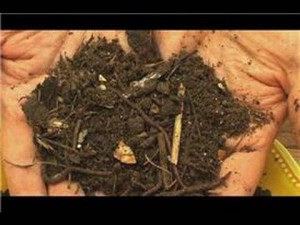
When gardeners decide to go organic they naturally want to use organic fertilizers indoors also. Unfortunately, most organic fertilizers add brown color to the drainage water or they are odiferous or both. As you have pointed out earthworm castings and homemade compost are inappropriate for indoor use and regardless of that, though both contain nutrients, neither is considered to be a fertilizer. But there are fertilizer products you can buy or make for yourself that are organic and yet have no odor. One of these is deodorized fish emulsion. Several brands are available, most of them are fully organic, and some bear the OMRI seal of approval.
When you feed houseplants with deodorized fish emulsion, the water that drains out the bottom of the pot may nonetheless have a brown tint. Solve this by taking care when removing excess drainage water from the drainage dish under the pot. The best solution is to fill the dish under the pot to the brim with gravel and place the pot on top. Then periodically use a bulb baster to transfer the excess water from the gravel into a bucket while taking care not to get spots on the carpet or bare floor. Or place the plant and its container inside a cachepot with a layer of gravel or pottery risers inside to hold plant roots safely above drainage water. Use the bulb-baster system to remove drainage water whenever necessary.
Other organic liquid fertilizers for indoor houseplants include products developed for hydroponics. A number of these products have no odor whatsoever and you can purchase them by the gallon or sometimes in smaller quantities. For a homemade organic fertilizer, you might try mixing up ordinary unflavored gelatine with hot water. Once dissolved, dilute the mixture with enough cold water so it’s no longer hot and then pour it on plant roots. Gelatine is almost pure nitrogen. If you think your plants need some phosphorus and potassium too, save and chop up all your banana peels for a week and put them into a quart jar filled with water. Let them ferment for a week or so and then pour the water on the plants. In my garden I have not noticed fermented banana peel water attracting any pests, either animals or insects and I actually throw the peels on the ground too. Until now I haven’t tried using the water on house plants but now I just may do that to see how it works.
i have heard that banana peels also repel aphids…true?
As with many organic or homemade pest remedies, there is no scientific proof that banana peels repel aphids. However, my experience and the experience of many gardeners seems to indicate that such is the case. People who laugh at this trick usually never bothered to try it out. For as long as I can remember some rose growers have advised gardeners to bury their banana peels around roses to add a quick source of potassium and phosphorus and thus increase flowering. Here again there is no scientific proof, but this trick does seem to work. As for me, I never throw out a banana peel. I toss most of them behind the fronds of my moosehorn ferns (Platycerium grande), which is the only fertilizer these magnificent specimens ever get and they thrive on it. If I have many banana peels, I chop them up and bury them around my roses. Another method is to chop the peels and put them into a jar of water to ferment and pour that around the roses. Since my large garden has no aphids, perhaps the banana peels are repelling aphids as well as feeding plants. Some gardeners suggest hanging banana peels on plants to repel aphids. If that were necessary I’d prefer to use other ways to get rid of aphids, such as releasing ladybugs and other beneficial insect and arachnids. Beneficial insects really do work and in this case there have been many scientific studies to prove this claim true. Even when ladybugs, for example, fly away they leave their eggs and larvae to munch on the aphids.
I used oscomot fertilizer on my garden is that organic.
Osmocote is a coated chemical fertilizer, very useful for certain things but not for the whole landscape. I use it for plants in containers. In some cases one or two tablespoons
on top of the soil will feed the plant for a whole month because it’s fed every time it’s watered.